

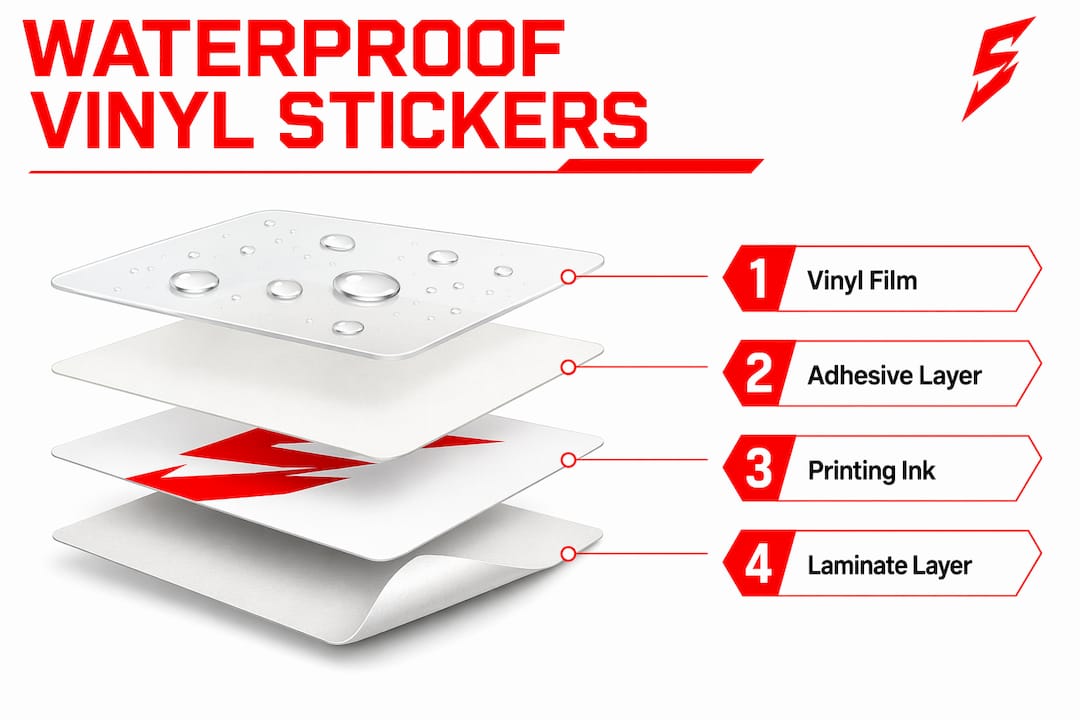
Vinyl stickers are water-resistant by nature, but only properly constructed laminated vinyl stickers with quality inks and adhesives are truly waterproof. The PVC film at the core of every vinyl sticker repels water on its own, yet that single layer is not enough for outdoor branding, water bottles, or dishwasher use. True waterproof performance depends on the full sticker system: the vinyl film, the adhesive, the ink, and a protective laminate working together. Skipping any one of those layers turns a “waterproof” claim into a marketing promise that fails the first time it rains.
Are vinyl stickers waterproof without a laminate?
Standard vinyl stickers are inherently water-resistant but not fully waterproof without a protective laminate and proper inks. That distinction matters more than most people realize. Water resistance means the surface sheds water for a while. Waterproof means the sticker maintains its bond, color, and structure through repeated or prolonged water exposure.
Consumers frequently misuse the term “waterproof” when “water-resistant” better describes unlaminated vinyl stickers. A sticker printed with water-based inks on bare vinyl film will smudge, fade, or peel when soaked. The vinyl film itself survives, but the ink and adhesive underneath do not. That is why the industry treats waterproof vinyl stickers as a complete system, not a single material.
Professionals view waterproof stickers as system builds comprising film, ink, adhesive, and laminate for effective performance. Each layer has a job. Remove one, and the system fails at its weakest point.
What materials determine waterproof performance?
Every component of a vinyl sticker contributes to its water resistance. Understanding each one helps you buy smarter and apply stickers correctly.
The vinyl film
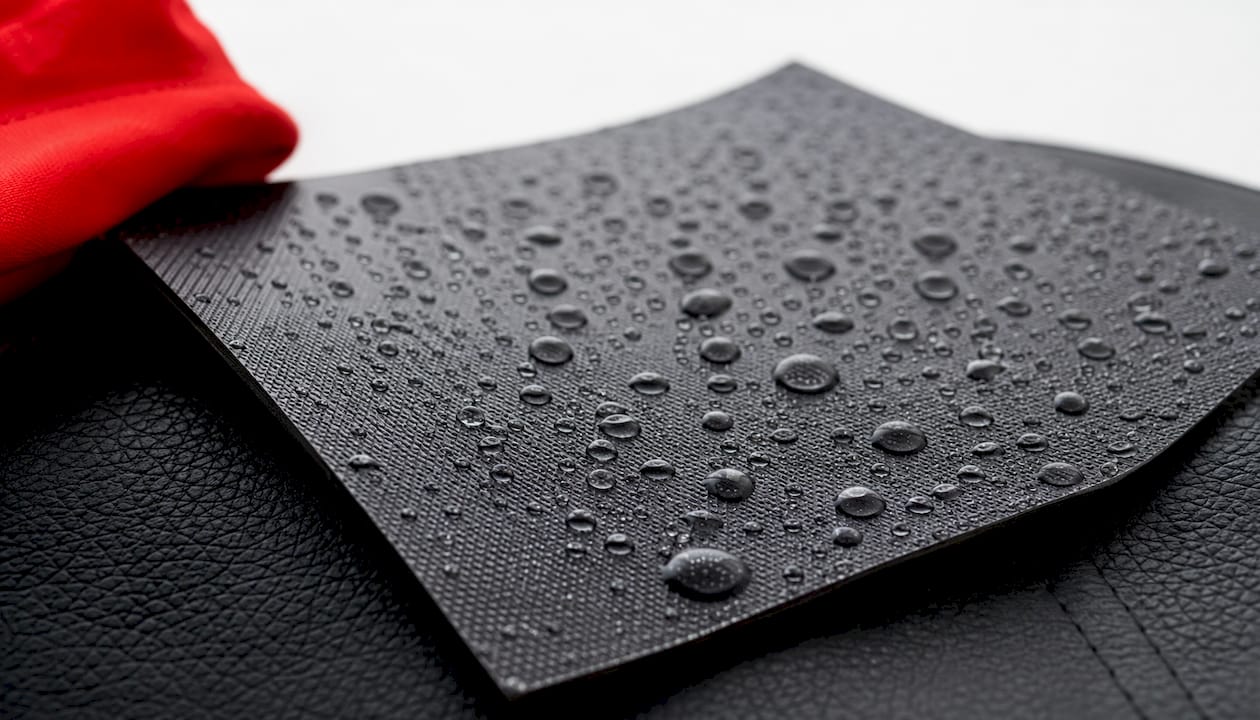
PVC (polyvinyl chloride) vinyl film resists water absorption at the surface level. It does not swell, warp, or dissolve when wet. This is why vinyl is the default material for outdoor signage, vehicle wraps, and product labels. However, the film alone cannot protect the ink layer printed on top of it or the adhesive layer beneath it.
The adhesive layer
Adhesive type is the most overlooked factor in waterproof performance. Marine-grade or solvent-based acrylic adhesives outperform standard adhesives in wet or hot environments. Standard water-based adhesives can dissolve or lose strength under moisture and heat stress. That means a sticker with a premium vinyl film and a weak adhesive will still peel off a water bottle after a few washes.
Different vinyl sticker adhesives have widely varying chemical resistance. Solvent-based acrylics remain strong in wet and hot conditions, unlike water-based adhesives. For any application involving repeated water contact, solvent-based acrylic is the correct choice.
The ink and printing method
Ink durability depends on the printing method and ink type. Eco-solvent and solvent-based inks bond tightly to vinyl and resist water far better than standard inkjet inks. UV-cured inks sit on the surface of the film and resist fading, but they still benefit from laminate protection. Water-based dye inks are the most vulnerable and should never be used on stickers intended for wet environments.
The laminate layer
Laminates not only prevent water ingress but improve UV resistance and abrasion protection, which is critical for outdoor vinyl sticker longevity. A gloss laminate adds a hard, clear barrier over the ink. A matte laminate does the same with a flat finish. Either option converts a water-resistant sticker into a genuinely waterproof one. Laminated waterproof vinyl stickers typically last 3 to 5 years outdoors. That lifespan drops sharply without lamination.
Pro Tip: When buying vinyl stickers for outdoor or wet use, always ask the seller whether the product includes a laminate layer. “Vinyl sticker” alone does not confirm lamination.
How do waterproof vinyl stickers perform in real-world conditions?
Waterproof performance is not one-size-fits-all. The right sticker for a laptop is not the right sticker for a kayak paddle. Each environment creates different demands.
Outdoor and vehicle applications
Outdoor vinyl stickers need waterproof plus UV and weather resistance to endure sun exposure, heat, and abrasion. Rain alone is rarely the problem. UV degradation causes colors to fade, and temperature swings cause adhesives to crack. Weatherproof vinyl stickers designed for outdoor use typically last 3–5 years with proper laminate and inks. Choosing a sticker rated only as waterproof for a vehicle bumper or outdoor sign means accepting faster color loss and edge lifting.
The difference between waterproof and weatherproof is specific: waterproof blocks moisture, weatherproof adds UV and abrasion resistance on top of that. Choosing the wrong type for the environment causes premature sticker failure. For anything mounted outside, weatherproof is the correct specification.
Water bottles and frequent wet contact
Stickers on water bottles face a unique challenge: repeated wet and dry cycles, occasional drops, and contact with lips or hands. Flexible vinyl with strong lamination handles this best. The sticker needs to bend slightly without cracking the laminate or lifting at the edges.
- Choose a sticker with a solvent-based acrylic adhesive rated for repeated water contact.
- Clean the bottle surface with isopropyl alcohol before applying the sticker.
- Allow a full 24–72 hours of curing time before the bottle gets wet.
- Hand wash when possible to extend sticker life.
- Avoid soaking the bottle in water for extended periods, even with a high-quality sticker.
Pro Tip: Apply your sticker to a dry, room-temperature bottle and leave it uncapped in a warm room for 48 hours before the first wash. That curing window makes a measurable difference in how long the sticker holds.
Dishwasher-safe stickers
Dishwasher-safe vinyl stickers require specialized solvent-based acrylic adhesives and a curing period before washing. A 24–72 hour waiting period after application optimizes adhesion. Even the best stickers may fail under harsh dishwasher cycles. Dishwasher-safe stickers must be handled carefully because heat and detergents cause gradual deterioration even with high-quality products. Low-temperature eco cycles extend sticker life significantly compared to high-heat sanitize cycles.
How to identify and choose truly waterproof vinyl stickers
Not every seller is transparent about sticker construction. These steps help you cut through vague claims and find stickers that actually perform.
- Check for laminate confirmation. Product listings should explicitly state whether a laminate layer is included. “Vinyl” alone does not mean laminated.
- Look for adhesive type details. Solvent-based acrylic adhesives signal a product built for wet conditions. Water-based adhesive descriptions suggest indoor or dry-use only.
- Understand the terminology. Water-resistant means the sticker sheds water temporarily. Waterproof means it withstands sustained water contact. Weatherproof adds UV and abrasion protection on top.
- Ask about curing time. Reputable sellers will specify a recommended wait time before water exposure. If no curing guidance exists, treat the sticker as untested for wet use.
- Verify outdoor durability ratings. Some manufacturers provide specific year ratings for outdoor use. A 3–5 year outdoor rating with laminate is a reliable benchmark for quality.
- Do not rely on the word “vinyl” alone. Ink smudging and adhesive peeling occur when protective layers are not applied. The material name tells you nothing about the full construction.
The clearest test you can run at home is the water drop test: apply the sticker to a clean surface, wait 48 hours, then run water over it and rub gently. If the ink smears or the edge lifts, the sticker is water-resistant at best.
Common pitfalls and how to maintain waterproof stickers
Even a well-made waterproof sticker fails early when applied or maintained incorrectly. These are the mistakes that cause the most damage.
- Applying to dirty or porous surfaces. Oil, dust, and texture prevent the adhesive from bonding fully. Always clean the surface with isopropyl alcohol and let it dry completely before application.
- Skipping the curing window. Adhesive curing involves molecular flow into substrate pores over 1–3 days, which is essential for maximum waterproof bond strength. Exposing the sticker to water before curing is complete is the single most common cause of early peeling.
- Using high-heat dishwasher cycles. Harsh dishwasher cycles with high heat and abrasive detergents degrade adhesives and laminate protection, causing sticker failure. Use the lowest heat setting available.
- Ignoring edge exposure. Water finds its way under stickers from the edges first. If the edges start to lift, press them down immediately or apply a thin layer of clear sealant around the perimeter.
- Using harsh chemical cleaners. Bleach-based or solvent cleaners strip laminate protection faster than water alone. Mild soap and water is the correct cleaning method for surfaces with stickers.
Pro Tip: If you notice an edge starting to lift, press it down firmly and apply a small amount of clear nail polish or Mod Podge around the border. This buys significant additional life before a full replacement is needed.
Key Takeaways
Vinyl stickers are water-resistant by default, but only laminated stickers with solvent-based adhesives and durable inks qualify as truly waterproof and suitable for outdoor, dishwasher, or repeated wet-contact use.
| Point | Details |
|---|---|
| Laminate is non-negotiable | Without a laminate layer, vinyl stickers are water-resistant, not waterproof. |
| Adhesive type drives wet performance | Solvent-based acrylic adhesives outperform water-based adhesives in wet and hot conditions. |
| Curing time protects the bond | Allow 24–72 hours after application before any water exposure to maximize adhesion. |
| Weatherproof beats waterproof outdoors | Outdoor use requires UV and abrasion resistance in addition to moisture protection. |
| Surface prep determines longevity | Clean surfaces with isopropyl alcohol before applying any sticker intended for wet use. |
What I’ve learned about waterproof sticker claims
The biggest misconception I see is that people treat “vinyl” as a synonym for “waterproof.” It is not. Vinyl is a material. Waterproof is a construction standard. A cheap vinyl sticker printed with water-based inks and no laminate will fail on a water bottle within a week. A properly built laminated sticker with solvent-based adhesive will outlast the bottle itself.
What professionals actually look for is the full system: film grade, ink type, adhesive chemistry, and laminate thickness. When I see a sticker listing that only mentions “vinyl” without specifying laminate or adhesive type, I treat it as an indoor-only product until proven otherwise. That skepticism has saved me from wasted orders more than once.
The other thing worth saying plainly: even the best waterproof sticker has limits. Prolonged submersion, industrial dishwasher cycles, and direct contact with harsh solvents will eventually break down any sticker. Matching the sticker’s construction to the actual environment is more important than chasing the highest-rated product on the market. A 3-year outdoor-rated sticker on a water bottle is overkill. A basic vinyl sticker on a car bumper is a mistake you will notice by spring.
— Lars
Waterproof vinyl stickers from Serpens

Serpens carries vinyl stickers and accessories built for people who care about how their gear looks and holds up. Whether you want stickers for personal gear, branded merchandise, or lifestyle accessories, the Serpens catalog is worth a look. The product range pairs well with the apparel lineup, so you can match stickers to hats, sweatpants, or raglan shirts for a consistent aesthetic. Check the full Serpens collection to find options that fit your style and your environment.
FAQ
Are all vinyl stickers waterproof?
No. Standard vinyl stickers are water-resistant, not waterproof. True waterproof performance requires a laminate layer, durable inks, and a solvent-based acrylic adhesive working together.
How long do waterproof vinyl stickers last outdoors?
Laminated waterproof vinyl stickers typically last 3–5 years outdoors when made with proper inks and adhesives. Unlaminated stickers degrade significantly faster under UV exposure and weather cycles.
Can vinyl stickers go in the dishwasher?
Dishwasher-safe vinyl stickers can survive dishwasher cycles, but only with specialized adhesives and a 24–72 hour curing period after application. High-heat sanitize cycles shorten sticker life even on premium products.
What is the difference between waterproof and weatherproof stickers?
Waterproof stickers block moisture. Weatherproof stickers add UV resistance and abrasion protection on top of moisture blocking. Outdoor applications require weatherproof, not just waterproof, construction.
How do I make a vinyl sticker more waterproof?
Apply the sticker to a clean, dry surface, allow 48–72 hours of curing time before water exposure, and seal the edges with a clear sealant if the sticker will face frequent wet contact. Choosing a laminated sticker from the start is the most reliable method.