

A hat size is the numerical or labeled measurement that corresponds to the circumference of your head at the point where the hat sits. Getting this number right is the difference between a cap that looks sharp and one that gives you a headache by noon. This hat size guide covers everything you need: how to measure your head at home, how to read a cap size chart, and how to account for fit factors that numbers alone won’t tell you. Whether you’re buying a fitted cap, a snapback, or a structured streetwear hat, the process starts with one accurate measurement.
How to measure your hat size at home
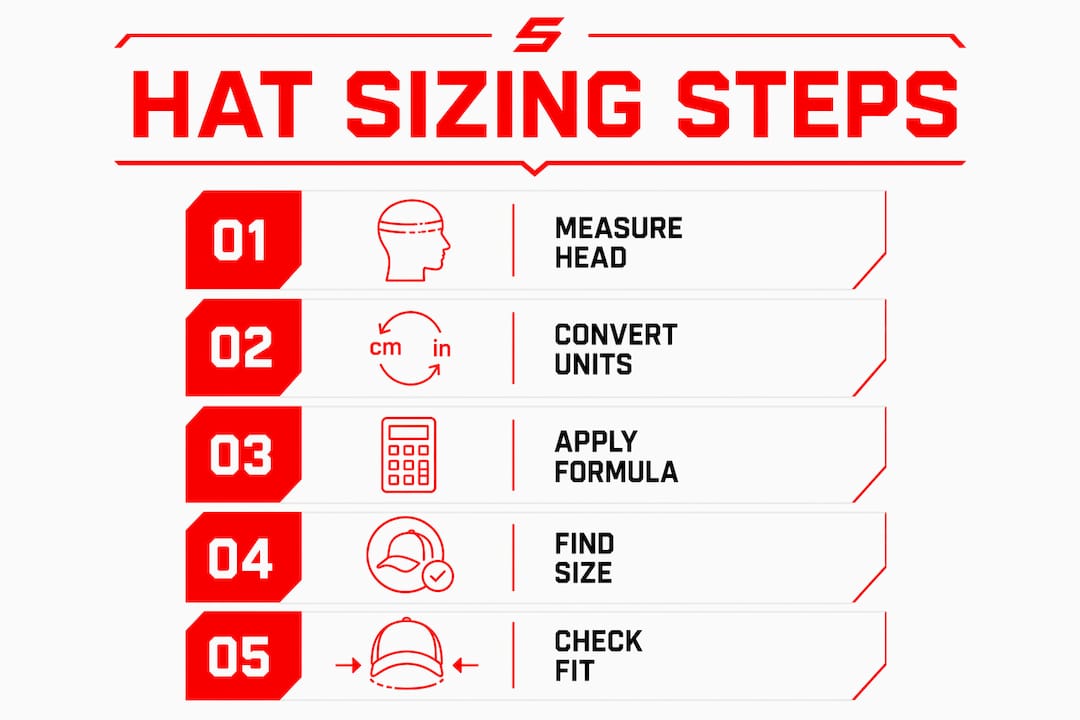
Measuring your head takes under a minute and requires only a flexible tape measure. Place the tape about 1/2 inch above your eyebrows and ears, wrapping it around the widest part of your skull. That single measurement, in centimeters or inches, is your head circumference and the foundation of every sizing decision you make.
Follow these steps for the most accurate reading:
- Grab a flexible tape measure. A cloth or plastic sewing tape works best. If you don’t have one, use a piece of string and measure it against a ruler afterward.
- Position the tape correctly. Start at the center of your forehead, about 1/2 inch above your eyebrows. Wrap it around just above your ears and across the widest part of the back of your head.
- Keep the tape snug, not tight. The tape should sit flat against your skin without compressing it. Loose tension is the most common measuring mistake and will give you a number that’s too large.
- Take two to three readings. Measure multiple times and use the largest number if they vary. Averaging two consistent readings also works well.
- Measure with your usual hairstyle. If you wear your hair up, measure with it up. If you typically wear a hat over loose hair, account for that volume in your measurement.
- Record both centimeters and inches. Write down both units. You’ll need centimeters for most international brand charts and inches for US fitted sizing formulas.
Pro Tip: If you’re using string instead of a tape measure, mark the string with a pen where it meets, then lay it flat against a ruler. String tension errors are common, so take at least three readings and average them.
The entire professional measurement process takes 30–60 seconds. The payoff is a number you can use confidently across every hat style and brand you shop.

How do hat sizing charts work?
Once you have your head circumference, a hat sizing chart converts that number into a standard size label. Three systems are in common use: US fitted sizes (expressed as fractions like 7 1/4), S/M/L/XL labels, and centimeter measurements used widely in European and international brands.
The US fitted size formula is straightforward. Divide your circumference in inches by pi (3.14) and round to the nearest 1/8 inch. A 22-inch circumference divided by 3.14 gives you approximately 7, which is a size 7 fitted hat. Sizes increase in 1/8-inch increments from there.
Here is a reference table covering the most common hat sizing ranges:
| Head circumference (cm) | Head circumference (in) | US fitted size | S/M/L label |
|---|---|---|---|
| 54–55 | 21.25–21.75 | 6 7/8 | XS |
| 56–57 | 22–22.5 | 7 | S |
| 58–59 | 22.75–23.25 | 7 3/8 | M |
| 60–61 | 23.5–24 | 7 5/8 | L |
| 62–63 | 24.5–24.75 | 7 7/8 | XL |
| 64 | 25.25 | 8 | XXL |
The average adult head circumference is approximately 57 cm (22.4 inches), which typically corresponds to a size Medium. Men average around 59 cm (23.1 inches), while women average about 57 cm (22.4 inches). Sizes across the population generally range from 54 to 64 cm.
A few key distinctions between sizing systems:
- Fitted hats use exact US fractional sizes and have no adjustment mechanism. They require the most accurate measurement.
- Flexfit hats use an elastic band and typically cover a two-size range, such as S/M (54–57 cm) or L/XL (58–61 cm).
- Adjustable hats (snap backs, strapbacks, and buckle-back styles) cover a broad range but sacrifice the tailored fit that comes from a properly measured size.
Pro Tip: Always check the brand’s specific size chart rather than relying on the S/M/L label alone. Identical numeric sizes can fit differently across manufacturers. Your centimeter measurement is the most portable and reliable number you own.
What else affects how a hat fits?
Head circumference gets you close, but it doesn’t tell the whole story. Crown depth, head shape, hair volume, and hat construction all affect whether a hat feels right once it’s on your head.
Crown depth refers to how tall the interior of the hat is from the brim to the top of the crown. A hat with a shallow crown will sit high on a round head and may feel unstable. A hat with a deep crown can swallow a narrow head and push down uncomfortably. This mismatch explains why two people with identical circumference measurements can have completely different experiences in the same hat.
Head shape matters too. Most heads are slightly oval rather than perfectly round. Structured hats with rigid crowns don’t flex to accommodate oval heads the way unstructured caps do. If you’ve ever found that a fitted cap feels tight at the sides but loose front-to-back, your head is likely more oval than the hat’s shape assumes.
A well-fitted hat should feel comfortable without feeling restrictive. Test the fit by moving your head naturally, shaking it side to side, and checking for pressure points or slippage. Sizing up slightly if you fall between two sizes is the standard recommendation, because a larger hat can be adjusted with hat tape or foam inserts, while a smaller hat cannot be expanded.
Hair volume is another variable most sizing guides skip. Measuring with your hair flat and then wearing the hat over a full blowout creates a real size gap. Measure with the hairstyle you actually plan to wear under the hat. If you wear seasonal beanies underneath in winter, account for that layer too.
Crown depth and head shape can create a poor fit even when circumference matches perfectly. When trying hats in person, always wear the hat for at least two minutes before deciding. Pressure points that feel minor at first become genuinely uncomfortable after an hour.
How do you buy hats online and get the fit right?
Buying hats online removes the ability to try before you buy, which makes your recorded measurements more valuable than any size label on the product page. The single most reliable number to use is your head circumference in centimeters. Brand sizing labels vary widely, but centimeter measurements are consistent.
Before purchasing, apply these practices:
- Check the product-specific size chart. General brand charts are a starting point, but individual hat styles within the same brand can have different crown depths and brim structures that affect fit.
- Read style notes carefully. Structured fitted caps run true to size. Unstructured caps often have more tolerance and can accommodate a half-size variation comfortably.
- Record your measurements permanently. Keep your head circumference in centimeters and inches saved somewhere accessible. This prevents re-measuring every time you shop and gives you a consistent baseline.
- Choose the larger size for structured hats. A larger hat can be tailored with foam inserts or hat tape. A smaller structured hat has no practical fix.
- Re-measure every 6–12 months. Head circumference changes slightly with hairstyle, weight, and seasonal factors. A measurement from two years ago may no longer be accurate.
Snapback sizing follows a different logic than fitted caps. Snapbacks are adjustable by design, typically fitting heads in the 56–60 cm range. The adjustment mechanism handles minor variation, but you still want your circumference to fall within the hat’s stated range. A snapback worn at its maximum or minimum adjustment point will look and feel off.
Key Takeaways
Your head circumference in centimeters is the single most reliable number for finding a correct hat size across any brand or style.
| Point | Details |
|---|---|
| Measure at the right spot | Place the tape 1/2 inch above eyebrows and ears, around the widest part of your head. |
| Use the US fitted formula | Divide circumference in inches by 3.14 and round to the nearest 1/8 inch to find your fitted size. |
| Size up when between sizes | A larger hat adjusts with inserts; a smaller structured hat cannot be expanded. |
| Trust centimeters over labels | Brand size labels vary; your centimeter measurement stays consistent across manufacturers. |
| Re-measure regularly | Head circumference shifts with hair, weight, and season, so check your size every 6–12 months. |
Why hat sizing is more art than algorithm
I’ve watched people agonize over hat sizing for years, and the most common mistake isn’t measuring wrong. It’s trusting the label too much. A size 7 3/8 from one brand fits like a 7 1/2 from another. The number on the tag is a starting point, not a guarantee.
The second most common mistake is ignoring head shape entirely. Circumference gets you in the right ballpark, but if you have a notably oval or round head, you need to factor that into every structured hat purchase. Unstructured caps forgive a lot. Fitted caps do not.
What I’ve found actually works is treating the measurement process as a one-time investment. Spend five minutes measuring carefully, record both centimeters and inches, note your head shape, and keep that information somewhere you’ll actually find it. Every future hat purchase gets faster and more accurate from that point forward.
Patience with the fit test matters too. Wear the hat around the house for a few minutes before committing. A hat that feels slightly snug at the store often becomes genuinely painful after two hours of wear. A hat that feels slightly loose is almost always fixable. The direction of error matters more than most people realize.
— Lars
Serpens hats: sized right from the start
Finding a hat that fits well starts with knowing your measurements, and Serpens makes the next step easy. The Serpens collection includes branded caps and lifestyle hats built for the kind of fit that holds up through a full day out.

Each product listing at Serpens includes sizing details so you can match your head circumference directly to the right option. No guessing, no returns from a size label that didn’t match reality. If you’ve done the measuring work this guide covers, you’re ready to shop with confidence. Browse the full range of Serpens headwear and find the cap that fits your size and your style.
FAQ
What is the average hat size for men?
Men average a head circumference of approximately 59 cm (23.1 inches), which corresponds to a size Large or a US fitted size of about 7 3/8.
How do I convert centimeters to a US hat size?
Convert your centimeter measurement to inches by dividing by 2.54, then divide by pi (3.14) and round to the nearest 1/8 inch to get your US fitted size.
What should I do if my measurement falls between two hat sizes?
Size up for comfort and use foam inserts or hat tape to adjust the fit. A larger hat can always be made smaller; a smaller hat cannot be stretched.
Do adjustable hats fit all head sizes?
Adjustable hats typically cover a range of 56–59 cm but do not offer the comfort and precision of a properly measured fitted hat. They work for most average-sized heads but not for those at the extremes of the size range.
How often should I re-measure my head for hat sizing?
Re-measure every 6–12 months, since head circumference shifts with changes in hairstyle, body weight, and seasonal factors like wearing hats over thicker hair in winter.