

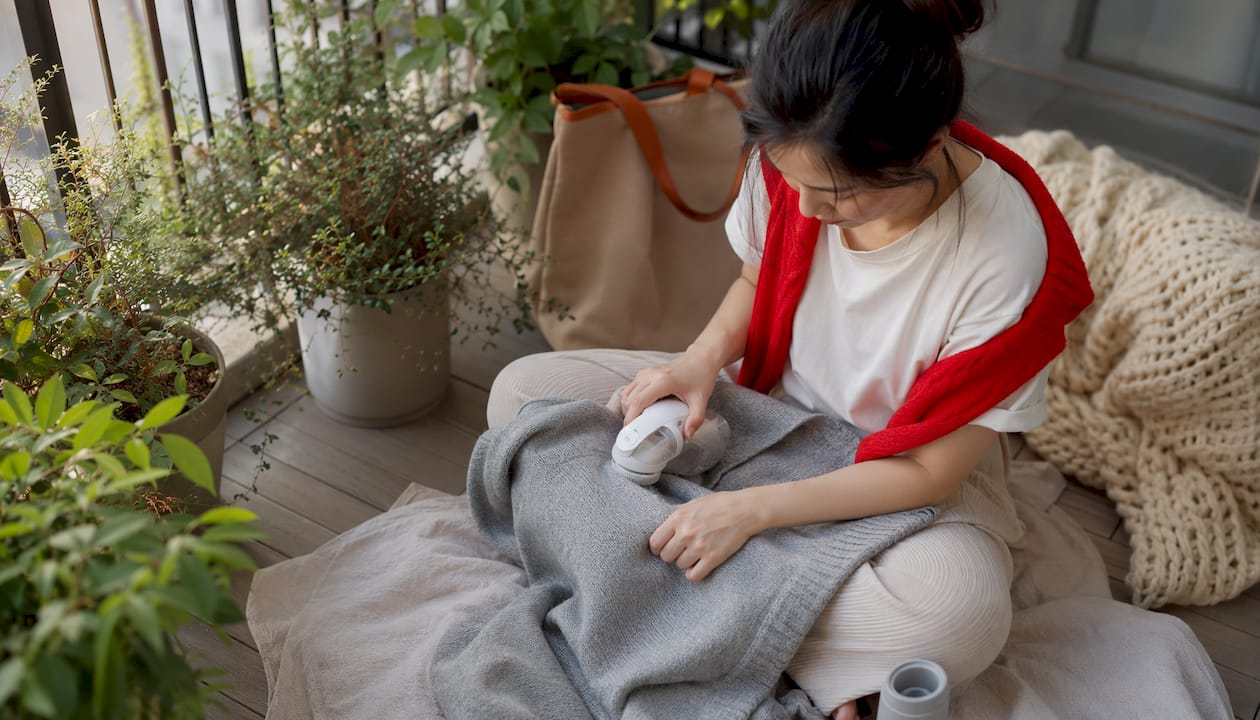
The fastest, safest way to remove pilling is with an electric fabric shaver (also called a defuzzer) held lightly against a flat, taut garment. Run it in slow, circular passes and let the blades do the work. No pressing, no rushing.
For small spots where pulling out the shaver feels like overkill, a few household options work well:
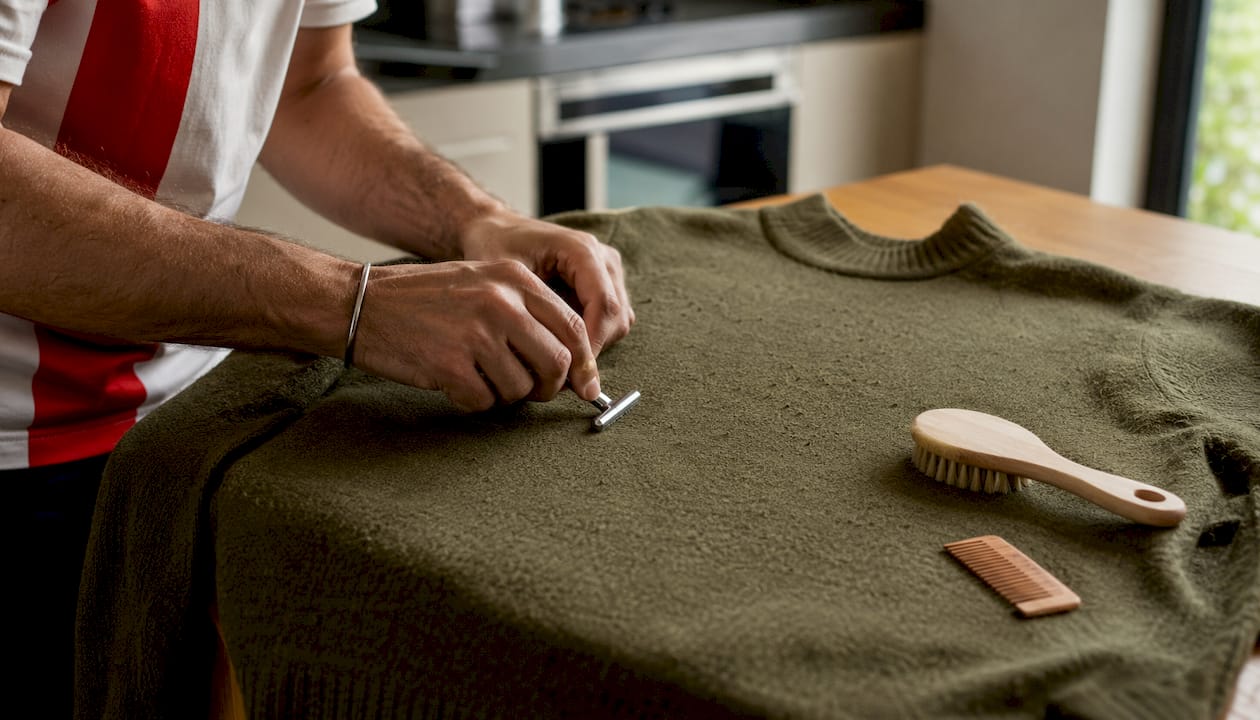
- Small scissors or a safety razor: Best for isolated pills on a stable fabric. Hold the fabric taut, keep the blade nearly parallel to the surface, and use almost no pressure.
- Lint roller or tape: Best for loose fuzz and surface debris after you’ve already removed the main pills.
- Pill stone (pumice or sweater stone): Best for delicate knits where a powered blade feels risky.
Pro Tip: Before using any tool on the whole garment, test it on a hidden spot, like an inner hem or side seam. Fine fibers like cashmere can develop holes from aggressive tools faster than you’d expect.
Table of Contents
- How to remove pilling: what it is and why it forms
- Which tools work best for de-pilling clothes?
- Step-by-step safe removal for each method
- Fabric-specific rules: what to use on what
- How to stop pilling before it starts
- Is pilling permanent? When to repair vs. replace
- Serpens expert tips for long-term garment care
- Key Takeaways
- The case for treating your clothes like they matter
- Useful sources for further reading
How to remove pilling: what it is and why it forms
Pills are those small, tangled balls of fiber that cluster on fabric surfaces, usually at friction points like underarms, cuffs, and the sides of a torso. They form when short or broken fibers work loose from the weave or knit, then twist together under repeated rubbing.
Friction is the root cause, but fabric structure determines how fast it happens:
- Short-staple fibers (common in budget cotton and some wool blends) break more easily than long-staple ones.
- Loose knits and blends that mix fibers of different strengths tend to pill faster because the weaker fibers snap while the stronger ones hold them in place.
- Synthetic content in a blend often anchors the broken natural fibers, keeping pills attached rather than letting them shed.
One thing worth knowing: pilling is not a sign of poor quality. Even expensive wool and cashmere sweaters pill when washed or worn with friction. It’s a maintenance issue, not a manufacturing defect.
Which tools work best for de-pilling clothes?
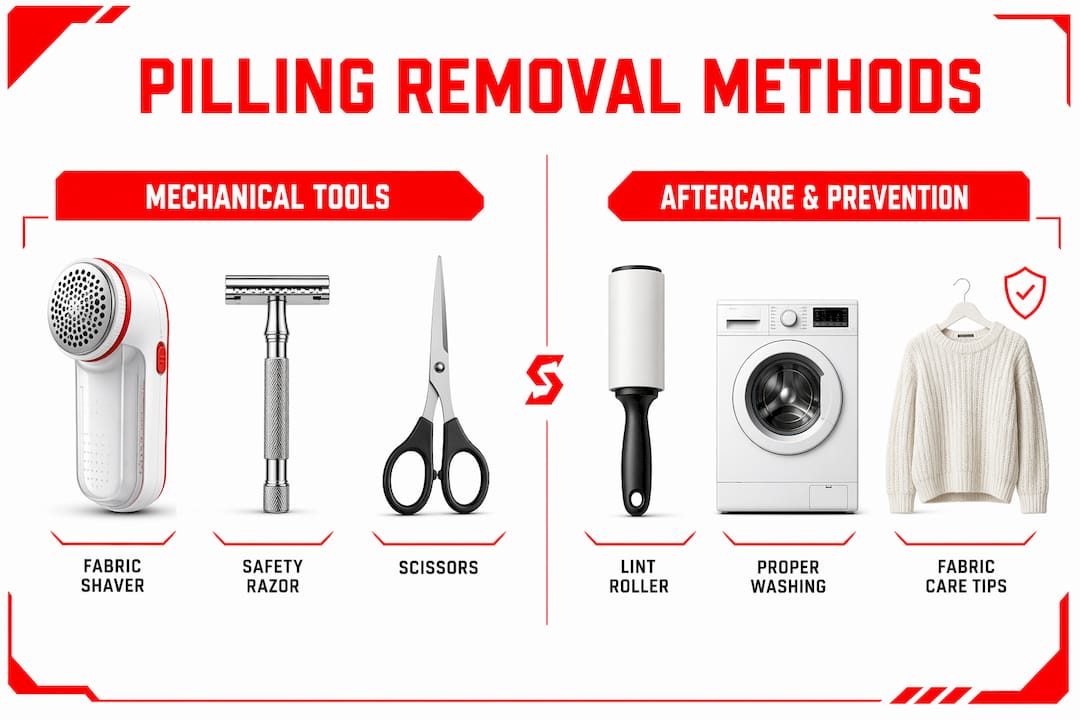
| Tool | Best for | Speed / area | Damage risk | Cost | Fabric suitability |
|---|---|---|---|---|---|
| Electric fabric shaver | Whole garments | Fast, large area | Low if used gently | under $20 | Most fabrics; test on delicates |
| Pill stone / sweater stone | Delicate knits, small areas | Slow, precise | Low with soft strokes | under $20 | Wool, cashmere, fine knits |
| Safety razor | Small isolated spots | Slow, very precise | Medium if rushed | Free (if on hand) | Stable wovens and firm knits |
| Small sharp scissors | Single large pills | Slowest | Low with care | Free | Any fabric |
| Lint roller / tape | Loose fuzz and aftercare | Fast, surface only | Very low | under $20 | All fabrics |
| Hand removal | Very loose pills | Slow | None | Free | All fabrics |
A few quick decision rules:
- Whole sweater covered in pills? Reach for the electric shaver.
- One or two pills on a cashmere scarf? Use a sweater stone or your fingers.
- No tools available and you need a quick fix? A strip of tape lifts surface fuzz in seconds.
Electric fabric shavers start under $20 for basic models and go up from there for multi-speed versions with larger heads. A pumice or sweater stone also costs under $20 and lasts for years with minimal care.
Step-by-step safe removal for each method
General prep (applies to every method)
Lay the garment flat on a firm, clean surface. Pull the fabric gently taut with one hand. Never work on a bunched or folded area. Before you start on a visible section, run the tool once on a hidden spot, like the inside of a cuff or the hem underside, and check for damage.
Electric fabric shaver
- Set the blade height to the lowest (closest) setting for thin fabrics; use a higher setting for thicker knits.
- Hold the shaver flat against the fabric. Do not tilt or press down.
- Move in slow, overlapping circles or straight passes. Let the suction and blades collect pills without extra force.
- Empty the collection cup every few minutes. A full cup reduces suction and causes the shaver to drag.
- Avoid seams, embroidery, buttons, and any raised trim. The blade can snag and cut threads.
Pill stone or sweater stone
- Hold the stone lightly and stroke in one direction only, short passes of 2–3 inches.
- After a few passes, brush loosened pills away with your hand or a lint roller.
- Never scrub back and forth. One-directional strokes protect the knit structure.
Safety razor or scissors
A safety razor works on small spots when the fabric is held completely taut. Use a plain razor with no moisture strip. Keep the blade nearly parallel to the surface and use the lightest possible touch. For scissors, snip each pill at its base, not across the fabric surface.
Lint roller or tape (aftercare)
After removing pills with any tool, roll a lint roller over the garment to pick up stray fiber debris. This also restores a bit of the nap. Repeat only as needed.
Pro Tip: Space out your de-pilling sessions. Frequent shaving gradually thins fabric by removing surface fibers each time. Treat visible buildup once it’s noticeable, not on a weekly schedule.
Fabric-specific rules: what to use on what
| Fabric | Recommended tool | Avoid | Notes |
|---|---|---|---|
| Cashmere | Sweater stone, fingers | Razors, aggressive shavers | Highest risk of holes; consider a professional service for heavy pilling |
| Fine wool | Sweater stone, low-speed shaver | High-speed blades | Test first; one-directional strokes only |
| Chunky wool / cable knits | Low-speed shaver or stone | High-speed settings | Loose loops can catch in blades |
| Cotton and cotton blends | Shaver or scissors | N/A | Cellulase detergents reduce pills over time |
| Fleece / activewear synthetics | Electric shaver | High heat or metal blades at high speed | Pills sit on the surface; shaver works fast but test for melt risk |
| Synthetic blends | Shaver or stone | Razors on loose knits | Synthetics hold pills firmly; shaver clears them efficiently |
A few fabric-specific points worth calling out:
- Cashmere is the most vulnerable fiber in everyday wardrobes. If a garment has significant pilling across the body, a professional re-finishing service is worth the cost rather than risking holes.
- Cotton responds well to enzyme detergents containing cellulase, which break down pills during the wash cycle before they become a removal problem.
- Fleece pills are usually surface-level and come off quickly with a shaver, but run the blade at a moderate speed. High-speed metal blades on synthetic fleece can occasionally melt fine fibers.
How to stop pilling before it starts
Laundry habits are the single most effective prevention lever. Small changes here reduce pilling more than any product you can buy.
Washing:
- Turn garments inside out before every wash. This puts friction on the interior, away from the visible surface.
- Use a mesh laundry bag for knits and delicates. It limits garment-on-garment abrasion inside the drum.
- Run a gentle or delicate cycle with cold water.
- Fasten all zippers and buttons before loading. Open metal hardware acts like sandpaper on adjacent fabric.
- Avoid overloading the machine. Crowded loads create more friction, not less.
Drying:
- Tumble drying increases fabric abrasion significantly. Lay knits flat to dry whenever possible.
- If you use a dryer, choose the lowest heat setting and a short cycle.
- Never hang sweaters. The weight stretches the knit and stresses fibers at the shoulders.
Wear habits:
- Bags and backpacks worn over sweaters create constant friction at the shoulders and sides. Rotating garments gives fibers time to recover.
- Rough outer layers like denim jackets worn over fine knits accelerate pilling at contact points.
Most people notice a visible reduction in new pill formation after four to six washes with these habits in place. The improvement is gradual but real.
Is pilling permanent? When to repair vs. replace
Pilling itself is not permanent. Removing the pills restores the garment’s appearance. What you cannot restore is the fiber length that was lost when those fibers broke. The fabric surface will look smooth again, but it is slightly thinner than it was before.
When repair makes sense:
- Pilling is limited to one or two areas on an otherwise sound garment.
- The item has sentimental or monetary value worth protecting.
- Structural integrity is intact (no holes, no thinning visible when held to light).
When replacement is the honest answer:
- Dense, persistent pilling returns within a wash or two after removal. This signals the fibers are too short and broken to hold.
- You can see thinning or small holes forming at high-friction points.
- The garment has been de-pilled multiple times and the fabric feels noticeably thinner.
For valuable knitwear with structural damage, a professional re-knitting or patching service can extend the garment’s life. Tailors and specialty knitwear repair shops handle this, and the cost is usually worth it for quality wool or cashmere pieces.
One thing to keep in mind: pills attract lint and dust, which adds weight that accelerates further fiber loosening. Removing pills promptly slows that cycle down.
Serpens expert tips for long-term garment care
Clean your fabric shaver after every use. Tap the collection cup empty, then use the small cleaning brush (most shavers include one) to clear fiber debris from the blade guard. A clogged blade drags instead of cutting, which means more pressure and more fabric damage. Replace the blade head when you notice it pulling rather than shaving cleanly.
Store knits folded, not on hangers. Keep your shaver in a dry spot with the blade guard on. Neither the garment nor the tool benefits from being left out in humidity.
Pro Tip: Test any removal tool on a hidden area first, especially on fine natural fibers. Fine fibers like cashmere can develop holes from aggressive tools faster than you’d expect.
For questions about caring for specific Serpens apparel, the product pages include fabric composition details that help you choose the right care method.
Key Takeaways
An electric fabric shaver on a flat, taut garment is the safest and fastest way to remove pilling from most clothing, with household alternatives like a sweater stone or safety razor covering small spots and delicate fabrics.
| Point | Details |
|---|---|
| Best tool for most garments | An electric fabric shaver (under $20) handles whole-garment de-pilling quickly and safely. |
| Top prevention habits | Wash inside-out, use a mesh laundry bag, and lay knits flat to dry. |
| Fabric caution | Always test on a hidden area first; cashmere and fine wool need the gentlest approach. |
| Avoid overdoing it | Frequent de-pilling thins fabric; treat visible buildup only when it accumulates. |
| Pilling is reversible | Removing pills restores appearance, but replace the garment if thinning or holes appear. |
The case for treating your clothes like they matter
There’s a tendency to treat pilling as a sign that a garment is done. It usually isn’t. A good sweater that’s been worn regularly for two years and developed some surface fuzz is still a good sweater. It just needs ten minutes and the right tool.
What actually shortens a garment’s life isn’t pilling. It’s the response to pilling: aggressive scrubbing, a dull razor dragged across the surface, or a high-speed shaver pressed too hard into a fine knit. Gentle, consistent technique preserves far more fabric than any shortcut.
At Serpens, the goal is apparel that holds up. A raglan or hoodie that looks sharp after two years of regular wear is the point. That doesn’t happen by accident. It happens because the person wearing it knows how to care for it. Check care labels, use the right method for the fabric, and treat de-pilling as maintenance rather than a last resort.
— Lars
Useful sources for further reading
These are the most practical, authoritative resources on fabric pilling and garment care:
- Better Homes & Gardens: Step-by-step removal instructions covering electric shavers, stones, razors, and scissors, with cost context and safety notes.
- The Spruce: Covers what pilling is, why it forms, and prevention habits including cellulase detergents for cotton.
- Whirlpool: Appliance-focused guidance on how dryer settings and wash cycles affect pilling rates.
- Maytag: Practical laundry sorting and cycle advice from an appliance manufacturer’s care team.
- Vogue: Fashion-focused guidance with specific cautions for fine natural fibers like cashmere.