

Removing sticker residue is a two-step chemical and mechanical process: soften the adhesive first, then lift it gently without damaging the surface beneath. The industry term for this process is adhesive removal, and it applies to everything from glass and metal to laptop lids and finished wood. The right method depends entirely on the surface. Isopropyl alcohol works on glass and metal, oils work on wood, and electronics need a careful, nearly dry approach. Get the sequence wrong and you risk scratching, staining, or warping the surface permanently.
What tools do you need to remove sticker residue safely?
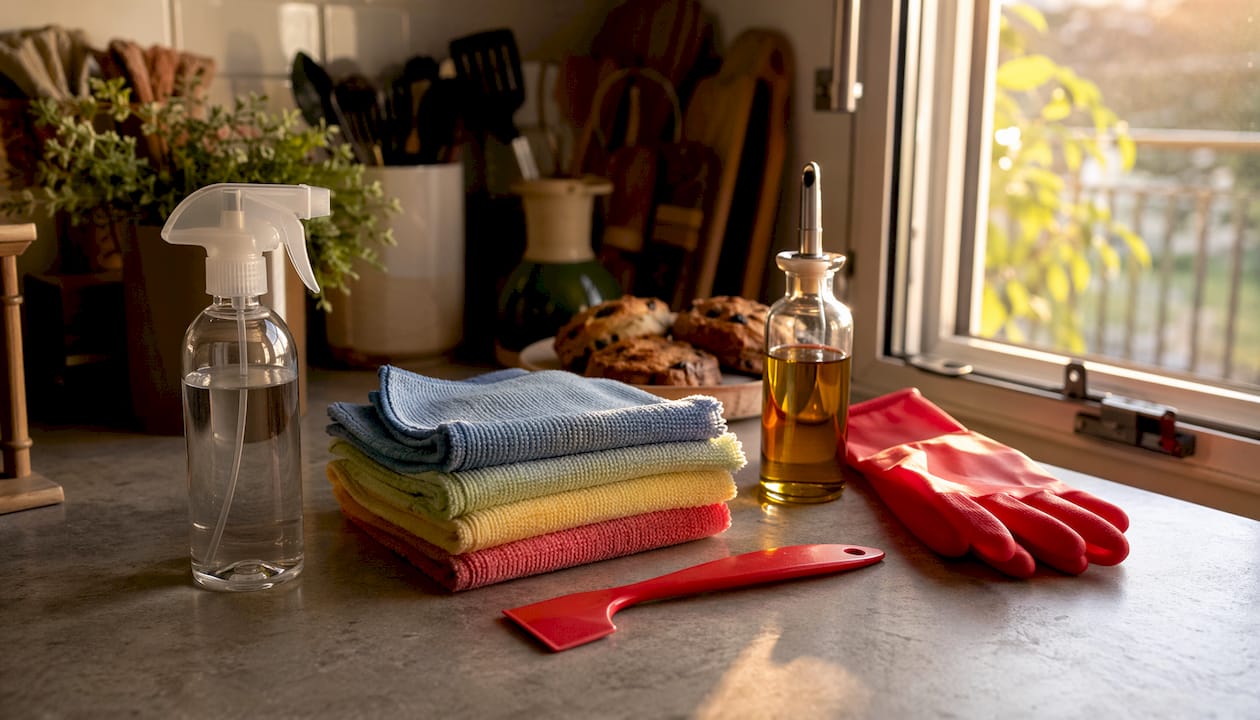
The right tools make the difference between a clean surface and a scratched one. You do not need commercial degreasers. Household items like isopropyl alcohol and cooking oils are effective and far safer for most surfaces.
Gather these before you start:
- Heat source: A hair dryer set to medium heat softens adhesive in 30–60 seconds without scorching most surfaces.
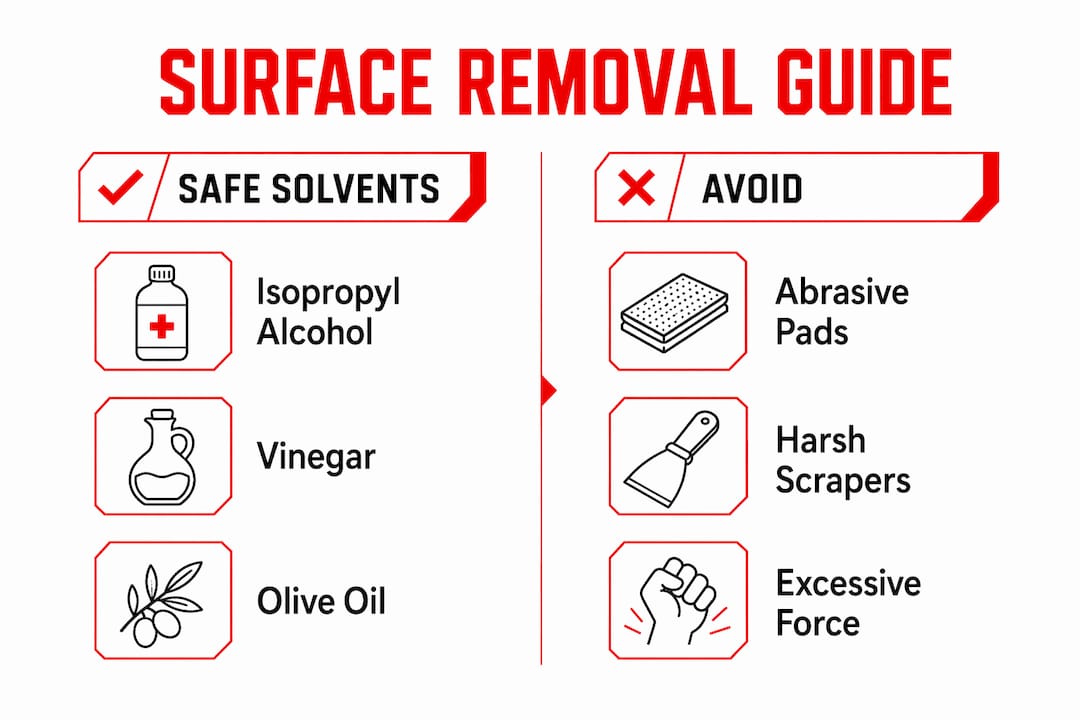
- Solvents: Isopropyl alcohol (70% concentration or higher) cuts through adhesive quickly and dries fast with no staining. White vinegar works as a milder alternative on glass and tile.
- Oils: Coconut oil, olive oil, or baby oil loosen adhesive on wood and delicate finishes without the harshness of chemical solvents.
- Scraping tools: Plastic scrapers and old credit cards lift residue without gouging surfaces. Never use metal scrapers on painted or plastic surfaces.
- Cloths: Microfiber cloths apply solvents evenly and pick up residue without leaving lint or scratches.
- Gloves: Protect your hands when using alcohol or vinegar for extended cleaning sessions.
Pro Tip: Always patch test any solvent or oil on a small, hidden area of the surface first. Materials like matte plastic, unfinished wood, and coated metal can react badly to chemicals, and a patch test takes only 30 seconds.
How to remove sticker residue from glass, metal, and plastic
Hard surfaces tolerate the widest range of removal methods, but each material still has limits. Glass handles alcohol and heat well. Metal can handle alcohol but may discolor with acids like vinegar. Plastic is the most sensitive and can warp under too much heat or crack with harsh solvents.
Follow these steps for hard surfaces:
- Apply heat. Hold a hair dryer 2–3 inches from the residue and run it on medium for 30–60 seconds. The adhesive softens and becomes pliable. Do not exceed 60 seconds on plastic, as the material can warp.
- Apply your solvent. Dampen a microfiber cloth with isopropyl alcohol (70%+). Press the cloth against the residue and let it sit for 5–10 minutes. Rubbing alcohol is a fast-drying solvent that cuts through adhesive with minimal scrubbing and leaves no stain.
- Scrape gently. Hold a plastic scraper or credit card flat against the surface at a low angle. Push the residue off in short, controlled strokes. Never dig the edge in at a steep angle.
- Wipe clean. Use a fresh microfiber cloth dampened with alcohol to remove any remaining film. Follow with a dry cloth to pick up any leftover moisture.
- Inspect and repeat if needed. Stubborn spots may need a second round of solvent and dwell time. Patience works better than pressure.
| Surface | Best solvent | Avoid |
|---|---|---|
| Glass | Isopropyl alcohol or vinegar | Abrasive pads |
| Stainless steel | Isopropyl alcohol | Vinegar (can pit finish) |
| Hard plastic | Isopropyl alcohol (diluted) | Acetone, excessive heat |
| Painted metal | Isopropyl alcohol (light application) | Acetone, steel wool |
Pro Tip: For glass, a razor blade held at a 45-degree angle removes dried residue cleanly. Use this only on flat glass, never on plastic or coated surfaces.
How to remove adhesive from a laptop safely
Electronics require the most careful approach of any surface. The risk is not just scratching the finish. Liquid seeping into ports or under keys can cause short circuits and permanent damage.
Follow this process to remove adhesive from a laptop or other electronics:
- Power off and unplug the device completely before touching it with any cloth or liquid.
- Use isopropyl alcohol at 70% or higher. This concentration dissolves adhesive safely without harming laptop finishes. Higher concentrations (90%+) evaporate even faster, which reduces moisture risk.
- Never spray liquid directly onto the device. Always dampen a microfiber cloth or cotton swab first. Direct liquid application risks seepage into internal components and can cause short circuits.
- Avoid acetone entirely. Acetone dissolves many plastics and screen coatings. It can irreversibly damage keyboard surfaces and display coatings in seconds.
- Use a cotton swab for tight spots. Lightly dampened swabs let you work around ports, vents, and keyboard edges without flooding the area.
- Try natural oils as an alternative. A small amount of coconut oil on a cotton swab loosens adhesive gently. Follow up immediately with an alcohol-dampened cloth to remove the oil residue completely.
Pro Tip: Work in a well-ventilated area when using isopropyl alcohol. The fumes are not dangerous in small amounts, but good airflow speeds up drying and keeps the workspace comfortable.
Removing sticker residue from wood and delicate surfaces
Wood is porous and often finished with coatings that react badly to acids and strong solvents. The goal on wood is to loosen the adhesive without letting any liquid soak into the grain.
The best approach for wood uses oil, not alcohol:
- Apply coconut or olive oil directly to the residue using a soft cloth. Oils are preferred for wood surfaces because they loosen adhesive without drying or staining the finish the way harsh solvents do.
- Let the oil sit for 5–10 minutes. The adhesive needs time to absorb the oil and release its grip. Rushing this step leads to more scrubbing, which risks scratching the finish.
- Wipe gently with a soft cloth. Use circular motions and light pressure. The residue should roll off without much effort after proper dwell time.
- Dry the surface immediately. Oil left on wood can soak into the grain and leave a dark stain. Wipe the area dry with a clean cloth right after cleaning.
- Never use vinegar on unfinished wood. Acid discolors raw wood and can raise the grain, leaving a rough patch that requires sanding.
- Avoid soaking the surface. Any liquid applied to wood should be minimal. Excess moisture warps wood and damages finishes over time.
For delicate surfaces like painted walls or fabric, the same oil-based approach applies. Test first, apply sparingly, and remove quickly.
Common mistakes that make sticker residue worse
The most common mistake is applying force before softening the adhesive. Scraping dry residue with a hard tool scratches the surface and spreads the adhesive into a wider, thinner film that is harder to remove.
Watch out for these specific errors:
- Using metal tools on plastic or painted surfaces. Metal edges gouge and scratch. Stick to plastic scrapers or credit cards.
- Applying too much heat for too long. Substrates like plastic and wood can warp or discolor if heat is applied beyond 60 seconds. Keep the dryer moving and time your application.
- Skipping dwell time. Solvents and oils need 5–10 minutes to break down adhesive. Wiping immediately after application wastes the product and forces you to scrub harder.
- Using acetone on electronics or plastic. Acetone dissolves many plastic finishes and screen coatings instantly.
- Soaking porous materials. Wood, unfinished stone, and fabric absorb liquids quickly. Excess moisture causes staining, warping, and mold.
“The most effective removal approach treats the adhesive-surface interface directly: soften the bond chemically or thermally, then lift gently. Force alone never works as well as chemistry plus patience.”
If your first attempt fails, do not increase force. Switch to a different solvent or extend the dwell time. A second application of oil or alcohol after 10 minutes of contact almost always removes what the first round missed.
Key takeaways
The most effective way to remove sticker residue is to soften the adhesive with heat, isopropyl alcohol, or oil before lifting it gently with a plastic tool.
| Point | Details |
|---|---|
| Soften before scraping | Apply heat or solvent first; never scrape dry adhesive off any surface. |
| Match method to surface | Use alcohol on glass and metal, oils on wood, and minimal moisture on electronics. |
| Respect dwell time | Let solvents or oils sit for 5–10 minutes to fully break down the adhesive bond. |
| Patch test every time | Test solvents on a hidden spot to avoid discoloration on matte plastic, wood, or coated metal. |
| Avoid acetone on electronics | Acetone irreversibly damages screen coatings and plastic keyboard surfaces. |
What I’ve learned from years of cleaning sticker glue off everything
The advice that actually saves surfaces is the advice most people ignore: slow down. Every time I’ve seen someone scratch a laptop lid or stain a wood shelf, it was because they grabbed the nearest sharp object and started scraping before the adhesive had any chance to soften.
My go-to combination for most surfaces is a 30-second hit of medium heat from a hair dryer, followed by isopropyl alcohol on a microfiber cloth with a full 5-minute wait. That sequence handles glass, metal, and hard plastic without drama. For wood, I switch to coconut oil and skip the heat entirely. The oil does the work; I just need to be patient enough to let it.
The patch test step feels unnecessary until the one time it saves you from stripping the matte coating off a $1,500 laptop. Do it every time on any surface you haven’t cleaned before. Thirty seconds of caution beats an hour of trying to fix a ruined finish.
The other thing worth knowing: synthetic adhesives (the kind used on most modern stickers and labels) respond well to alcohol. Natural rubber-based adhesives, which show up on older labels and some craft stickers, respond better to oils. If alcohol isn’t working after two attempts, switch to oil. That single adjustment solves most stubborn cases.
— Lars
Stickers, style, and keeping your gear looking sharp
Stickers are part of the culture at Serpens. The brand sells accessories and apparel built for people who actually use their gear, which means knowing how to keep everything looking clean matters. Whether you picked up a Serpens sticker for your laptop or your water bottle, the methods above will get the surface back to perfect when you’re ready for a change.

Serpens carries branded stickers, hats, raglan shirts, and more for anyone who wants their style to carry through from their wardrobe to their everyday carry. Browse the full Serpens collection and find pieces worth sticking around for.
FAQ
What is the fastest way to remove sticker glue?
Apply a hair dryer on medium heat for 30–60 seconds to soften the adhesive, then wipe with isopropyl alcohol on a microfiber cloth. This combination removes most residue in under five minutes.
Can I remove adhesive from a laptop without damaging it?
Yes. Power off the device, dampen a microfiber cloth with 70%+ isopropyl alcohol, and wipe gently. Never spray liquid directly onto the laptop and never use acetone, which damages screen coatings and plastic finishes.
Does vinegar remove sticker residue?
Vinegar removes residue from glass and tile effectively, but avoid it on unfinished wood and stainless steel. The acid in vinegar can discolor wood grain and pit certain metal finishes.
How long should I let a solvent sit on sticker residue?
Solvents and oils need 5–10 minutes of contact time to fully break down the adhesive. Wiping immediately after application reduces effectiveness and forces harder scrubbing.
Is it safe to use cooking oil to clean sticker glue off wood?
Coconut oil and olive oil are safe and effective on finished wood. Apply sparingly, wait 5–10 minutes, wipe clean, and dry the surface immediately to prevent oil from soaking into the grain and causing staining.