

Yes, you can shrink a hoodie at home. One hot wash followed by a high-heat tumble-dry cycle is the standard approach, and for most cotton-rich hoodies it produces a noticeable size reduction. The catch: shrinkage is global, not targeted. Heat and water tighten the entire garment at once, so you cannot reliably pull in just the shoulders or shorten only the sleeves. If the care label forbids hot water or high heat, stop there. And if your hoodie carries large front graphics, heat-transfer vinyl, or plastisol prints, aggressive heat is a real risk to those finishes.
The fiber content matters just as much as the method. Cotton responds well. Polyester resists. Blends land somewhere in between. The sections below walk through the full process, the fabric science, and the situations where a tailor beats a washing machine every time.
Table of Contents
- How to shrink a hoodie safely, step by step
- Which fabrics actually shrink, and which ones don’t?
- How to protect prints, logos, and specialty finishes
- When shrinking is a bad idea and tailoring is the right move
- Common problems and how to fix them
- Key Takeaways
- The case for knowing your limits before you start
- A better fit might just mean a different size
- Useful sources
How to shrink a hoodie safely, step by step
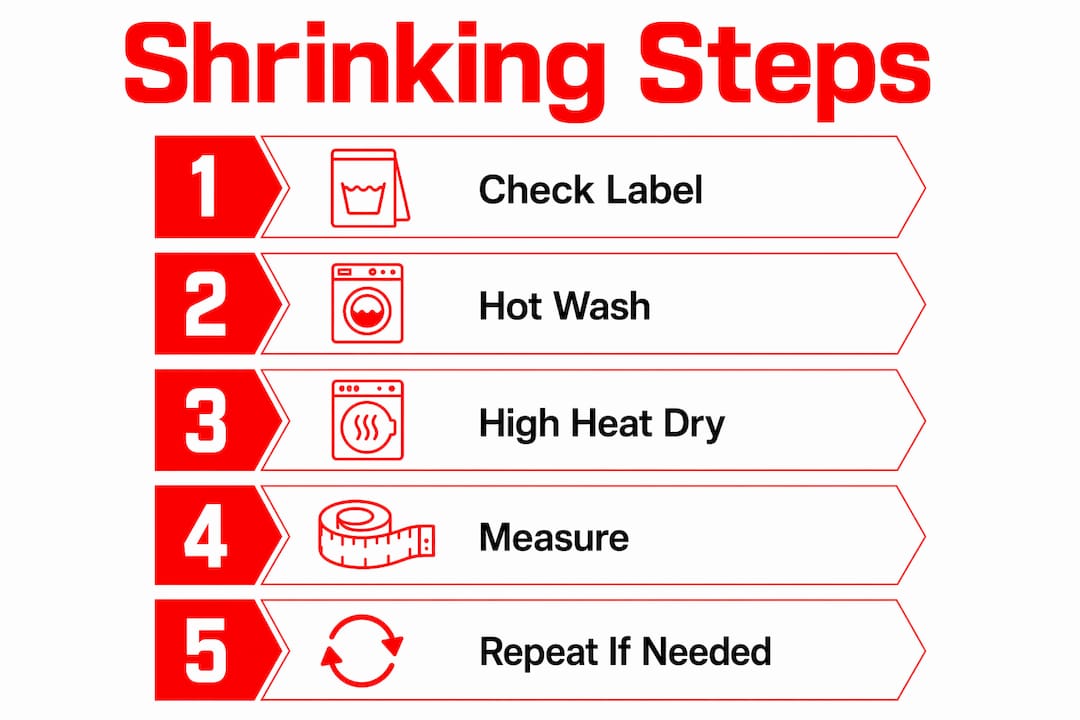
The safest approach is incremental: one cycle, then measure, then decide whether to repeat. Rushing the process is how hoodies end up two sizes too small.
- Check the care label. Look for the water temperature and dryer heat symbols. If the label says “dry clean only” or shows a crossed-out dryer, stop. Hot water on a “cold wash only” item risks irreversible damage beyond just size.
- Prep the hoodie. Turn it inside out to protect surface prints. Zip up any zipper, tie the drawstrings, and remove anything in the pockets. Wash it alone or in a half-load so it tumbles freely.
- Run one hot wash cycle. Use the hottest water setting the label permits. Transfer the hoodie to the dryer immediately after the spin cycle ends.
- Dry on high heat for 15–20 minutes, then check. Pull it out while slightly damp. Over-drying locks in the new dimensions and can make the fleece feel rough. Measure pit-to-pit, body length, and sleeve length against a hoodie that fits you well.
- Repeat only if needed. Run one additional hot-wash and high-heat dry cycle if you need more reduction. Single-cycle increments give you control.
Time estimate: The first cycle plus measurement takes roughly 45–60 minutes. Each additional cycle adds 15–30 minutes.
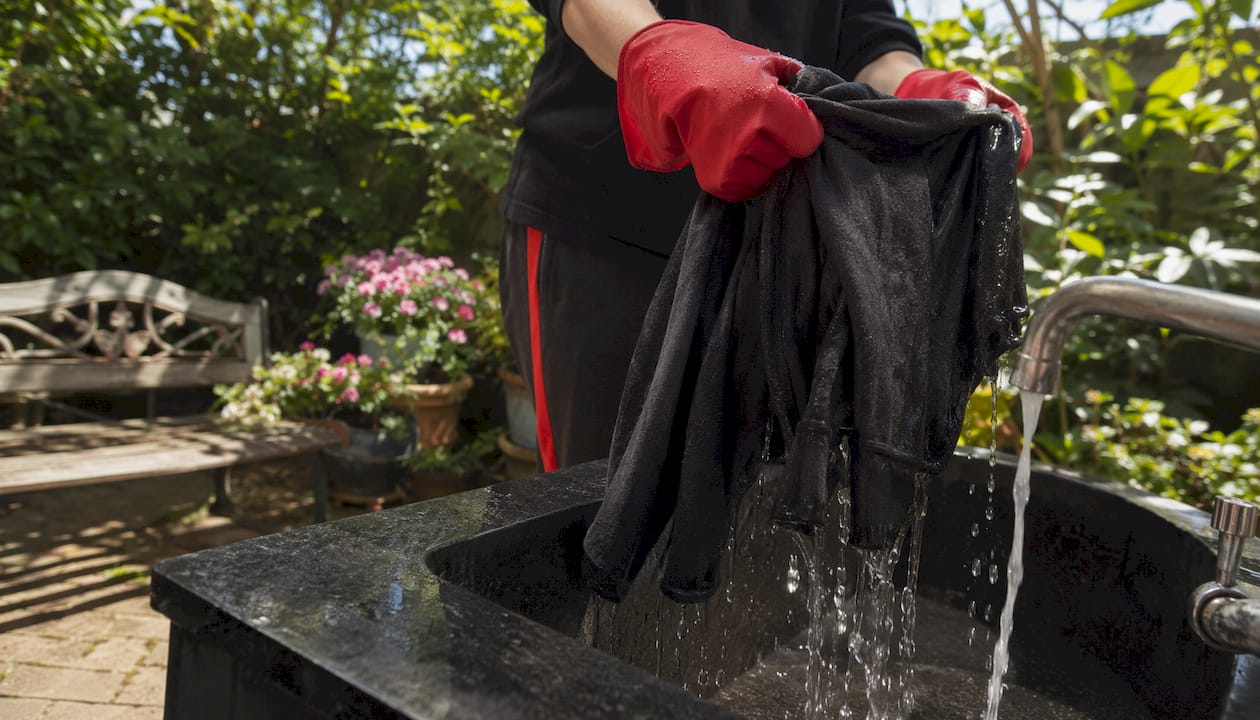
Pro Tip: Use heat-safe gloves if you attempt a hot-water soak method. Handling a soaking-wet hoodie pulled from near-boiling water is a burn risk that most guides skip over.
Which fabrics actually shrink, and which ones don’t?
Fiber type, water saturation, and mechanical agitation drive shrinkage, not heat alone. Here is how common hoodie materials behave:
| Fabric | Shrink Potential | Key Risk | Best Approach |
|---|---|---|---|
| 100% Cotton | High shrinkage potential in the first wash and dry cycle | Color fade with extreme heat | Hot wash + high-heat dry; test first |
| Cotton/Poly Blend (50/50) | Moderate shrinkage potential | Uneven panel shrinkage | Warm wash + medium-high dry |
| 100% Polyester | Very low (often under 1%) | Fiber glazing, print damage | Avoid heat shrinking entirely |
| Fleece (poly-based) | Very low | Melting, pilling, texture loss | Skip heat methods; tailor instead |
| Elastane/Spandex blend | Low; fabric may rebound | Elastic fiber degradation | Avoid high heat |
Cotton fibers are hydrophilic: they absorb water and contract under heat through a process called relaxation shrinkage. In a 50/50 cotton-poly blend, the polyester acts as a structural anchor and suppresses that contraction, which is why cotton is the most responsive fiber for home shrinking while polyester-heavy garments largely resist it.
Fleece hoodies deserve a specific note. Most fleece is 100% polyester, heat-set during manufacturing. High heat does not resize them. It damages them, producing glazed patches on brushed interiors or melting heat-transfer decorations. A shrinking fleece hoodie is almost always a cotton-fleece blend, not a standard poly fleece.
How to protect prints, logos, and specialty finishes
Branded hoodies are the ones most likely to get damaged during a shrink attempt. Large front graphics, heat-transfer vinyl, and plastisol inks are all sensitive to aggressive heat. Once a print cracks or peels, there is no reliable home fix.
Do:
- Turn the hoodie inside out before every wash and dry cycle
- Use the lowest effective heat setting, not the maximum
- Secure metal hardware (zippers, grommets) to prevent abrasion against printed surfaces
- Check the product page or brand site for any heat-sensitivity notes before you start
Don’t:
- Boil a hoodie with large front or back graphics
- Run repeated high-heat cycles on screen-printed or vinyl-decorated garments
- Apply a steam iron directly to a transfer or DTF print
- Assume embroidery is safe at high heat; metallic or foil-accented threads can degrade
If the label or product description mentions heat-sensitive finishes, tailoring is the smarter call. A tailor preserves the print. A washing machine does not guarantee it.
When shrinking is a bad idea and tailoring is the right move
Home shrinking works for overall size reduction on cotton-rich, lightly decorated hoodies. It does not work for precision. Shrinkage cannot selectively target shoulders, sleeves, or hem through laundry methods. You might end up with shorter sleeves but a body that is still too wide, because different panels and seam constructions respond at different rates.
Tailoring is the right choice when you need a specific change: taking in the side seams, shortening sleeves by a set amount, or adjusting the hem. A skilled tailor can do all of this without touching the print.
Pro Tip: When sewing knit fabrics like hoodie fleece, use a zigzag or stretch stitch rather than a straight stitch. A straight stitch breaks under stretch, and a ballpoint or stretch needle prevents skipped stitches and snags on the fabric loops.
Common problems and how to fix them
Hoodie came out too small. Soak it in lukewarm water with a small amount of fabric conditioner for 20–30 minutes, then gently stretch it to your target dimensions while wet and air-dry it flat. This works best on natural-fiber knits and offers partial reversal, not a guarantee.
- Fleece feels rough or crunchy. Over-drying causes this, and in severe cases the texture change is permanent. Stop all high-heat cycles. Wash gently in cool water and air-dry going forward.
- Pilling on the surface. A fabric shaver removes existing pills carefully. Repeated hot cycles accelerate surface wear, so limit heat exposure after the first shrink attempt.
- Print cracking or peeling. There is no reliable home repair for a badly damaged transfer or screen print. Prevention, meaning inside-out washing and lower heat settings, is the only practical strategy.
- Uneven shrinkage. While the hoodie is still damp, gently stretch the areas that pulled in too much and reshape the garment before it dries completely.
Key Takeaways
Cotton-rich hoodies can be safely reduced one size with a single hot wash and high-heat dry cycle, but protecting prints and knowing when to tailor instead are what separate a good outcome from a ruined garment.
| Point | Details |
|---|---|
| Check the label first | The FTC Care Labeling Rule requires care instructions on every U.S. garment; hot water or high heat on a “cold only” item causes irreversible damage. |
| One cycle, then measure | Roughly 90% of a cotton hoodie’s shrink potential appears in the first wash and dry cycle; measure before running a second cycle. |
| Fiber type determines results | Cotton shrinks noticeably in the first cycle; polyester-heavy and fleece hoodies resist heat and risk damage instead. |
| Prints need protection | Turn inside out, use the lowest effective heat, and skip boiling entirely when large graphics or heat-transfer vinyl are present. |
| Serpens hoodies | If shrinking feels too risky, Serpens carries branded hoodies in multiple sizes so you can get the right fit from the start. |
| Serpens hoodies | If shrinking feels too risky, Serpens carries branded hoodies in multiple sizes so you can get the right fit from the start. |
The case for knowing your limits before you start
Most guides treat home shrinking as a simple fix. It is not always that. The method works cleanly on a plain, cotton-heavy sweatshirt with no decoration. On a branded hoodie with a full-chest graphic and a 60% polyester construction, the same method risks damaging the one thing that made you buy it in the first place.
The honest recommendation: use heat shrinking for small, overall size adjustments on cotton-rich, lightly decorated pieces. For anything with significant graphics, a high poly content, or a fit issue that is specific to one area, go straight to a tailor. The $20–$40 alteration cost is less than replacing a hoodie whose print you just cracked.
There is also a third option that people overlook: buy the right size to begin with. Measuring pit-to-pit and comparing against a brand’s size chart before ordering eliminates the problem entirely.
A better fit might just mean a different size
If the shrink method feels like too much risk for a hoodie you actually care about, there is a straightforward alternative. Serpens carries branded hoodies, sweatpants, and casual apparel across a full size range, so you can match your measurements to the right fit before anything ships. Use the pit-to-pit measurement from your best-fitting hoodie and compare it directly against the size chart on the product page. That one step eliminates most sizing guesswork. Browse the current hoodie collection at Serpens and find the size that works without the heat.
Useful sources
- How to shrink clothes in the wash, Martha Stewart
- How to make a hoodie smaller, HoodieOEM
- Adjusting your hoodie: tricks and ways to shrink and adjust, Clothing Manufacturer Ltd
- How to shrink a sweatshirt, Topwalli