

The short answer: pull it snug, position it just above or covering your ears, and match the knit weight to your outfit. That’s the foundation. Everything else, the slouch, the cuff, the fisherman perch, is a variation on that core. Beanies are one of the few accessories that work across virtually every style register, from a trench coat and wide-leg trousers to a puffer and sweats, but only when worn with intention.
Here’s what actually matters when figuring out how to wear a beanie in 2026:
- Fit first. A beanie that’s too small looks like you’re trying too hard. Too slouchy and you’re heading toward what stylists call the “Victorian nightcap” territory.
- Placement is everything. Sitting it just above the ears reads stylish. Pulling it below the brows hides your face shape.
- Match the knit to the outfit. Chunky cable knit with a heavy parka. Fine-gauge merino with a tailored coat.
- Cuffed vs. uncuffed. Cuffed beanies read more polished. Uncuffed or slouchy styles lean casual and streetwear.
- Fisherman style (short, worn high) is the 2026 workwear-inspired pick for men and women who want something less expected.
Pro Tip: Before you leave the house, check the beanie in a mirror from the side. If the back is ballooning out unintentionally, fold it once or switch to a more fitted style. Uncontrolled slouch is the single most common beanie mistake.
Table of Contents
- How to wear a beanie: the six core styles
- How a beanie should fit for style and comfort
- Styling beanies by occasion and outfit
- Styling tips by face shape and hair type
- Common mistakes and how to avoid looking awkward
- 2026 beanie trends and what stylists are saying
- Key Takeaways
- The beanie deserves more credit than it gets
- Serpens has the pieces to build around your beanie
How to wear a beanie: the six core styles
Most beanie styling advice boils down to six distinct ways to wear one. Each has its own vibe, occasion fit, and practical use case.
-
Standard fit (ears covered). Pull the beanie snugly down over your ears. This is the warmest option and the most practical for cold weather. It works with almost any casual outfit and is the default starting point for most people.
-
Pushed back (forehead exposed). Slide the beanie back so it sits on the crown of your head, showing your hairline and forehead. This is the “effortless cool” position that celebrities favor. It’s less warm but more fashion-forward, and it frames the face better than pulling it low.
-
Slouchy style. Let the back of the beanie drape loosely behind your head. This works best with oversized outerwear or streetwear. The key is keeping the front positioned correctly — don’t let the whole hat drift backward.
-
Cuffed beanie. Roll the brim once or twice to create a thick fold at the base. This gives a cleaner, more structured silhouette and pairs well with everything from flannel shirts to smart-casual coats. The cuff also adds a subtle visual anchor at the forehead.
-
Fisherman beanie. Short, tight, worn high on the head with just a single roll. It sits above the ears rather than covering them. This style has a strong workwear and coastal heritage, and it’s having a genuine moment in 2026 alongside the broader workwear aesthetic trend.
-
Uncuffed/skull cap. No fold, pulled straight down. Minimalist and streamlined. This works especially well with heavy winter layers where you don’t want extra bulk around the face.
How a beanie should fit for style and comfort
Fit is the variable most people get wrong, and it’s the one that matters most. British GQ puts it plainly: there’s no single correct way to wear a beanie, but the sweet spot is pulling it snug over the ears or just above them for a more stylish balance.
What to keep in mind:
- Snug, not tight. A beanie should sit close to your head without leaving a red line across your forehead. Beanies with elastic tend to tighten uncomfortably and look less polished.
- The ear rule. Wearing a beanie significantly above the ears, especially if you have larger ears, creates a cartoonish, unbalanced silhouette. The optimal position is just touching or slightly above the ear’s top.
- Slouch with intention. Excess fabric at the back is fine when it’s deliberate. Unintentional slouching, where the hat just drifts, reads sloppy and can veer into Victorian nightcap territory.
- Too small is its own problem. A beanie that barely covers the crown looks like it’s perching rather than sitting. Stylists describe this as “peacocking,” and it rarely lands the way the wearer intends.
- Fitted styles with heavy layers. When you’re already wearing a coat, scarf, and hoodie, a fitted beanie keeps the silhouette clean. A slouchy beanie on top of all that volume adds bulk where you don’t need it.
Pro Tip: Try the beanie on with the actual outfit you plan to wear, not just in isolation. A style that looks great with a t-shirt can look completely wrong once you add a turtleneck and overcoat.

Styling beanies by occasion and outfit
The biggest styling mistake isn’t the beanie itself — it’s the mismatch between the beanie’s register and the rest of the outfit. Celebrity stylist Mickey Freeman advises treating a beanie as a visual endpoint of the look, something that anchors the silhouette rather than competing with it.
Here’s how to match the beanie to the setting:
- Casual everyday. Slouchy or textured beanies work perfectly with jeans, hoodies, and casual outerwear. Experiment with bolder textures or patterns here since the relaxed context gives you room to play.
- Smart-casual. Reach for a cuffed or fine-gauge knit beanie. Pair it with a wool overcoat, tailored trousers, and leather shoes. Keep the color neutral — grey, navy, or black.
- With a trench coat. Freeman specifically recommends wearing a fitted beanie pulled down low with a well-fitted trench, a t-shirt, wide-leg trousers, and low-top trainers. He calls it “a unisex template you can’t go wrong with.”
- With heavy winter layers. Match the beanie’s weight to the outfit. Chunky knits belong with casual heavy layers; fine-gauge knits complement dressier outerwear.
- As a color anchor. When your outfit spans multiple colors or patterns, a solid dark beanie grounds the look. Black beanies are particularly effective at creating a focal point when you’re wearing bold prints or mixed tones below.
- Formal wear. Skip the beanie. A wool hat or structured headband reads better at formal occasions. Beanies belong in the casual-to-smart-casual range.
For ideas on building complete cold-weather outfits around a beanie, layering for cold weather is worth exploring as a reference for how to balance warmth and style across multiple pieces.

Styling tips by face shape and hair type
Your face shape should influence which beanie style you choose and where you position it. The same goes for your hair.
By face shape:
- Round faces need vertical height. Wear the beanie higher on the head, avoid styles that sit flat or wide. A ribbed, taller beanie adds the elongating effect you want.
- Long or narrow faces benefit from width. A cuffed beanie with a thicker brim adds visual mass and balances elongated proportions.
- Heart-shaped faces soften with rounded, less structured knits. Avoid very angular or stiff styles.
- Oval faces can wear almost any beanie style — this is the most forgiving face shape for headwear.
By hair type:
- Long hair. Let it flow out from the bottom of the beanie, or wear two low pigtails (braided or straight) peeking out beneath the hem. Avoid high ponytails under the hat — they create an uncomfortable bulge.
- Short hair. Nearly any style works. A snug cuffed beanie or fisherman style both look clean with short cuts.
- Curly hair. Position the beanie slightly back on the head so curls frame the face at the front. A slouchy or cuffless style gives curls room to breathe without flattening them.
- Fine hair. Tight beanies flatten fine hair quickly. Opt for a slightly looser fit and dry your hair upside down before wearing a beanie to lift the roots.
- Bangs. Wear the beanie slightly back so bangs peek out below the brim. This keeps the style intentional rather than hidden.
Common mistakes and how to avoid looking awkward
“Wearing beanies isn’t for the fashion faint of heart,” Freeman told Parade. “They can look amazing when styled correctly, but can appear awkward and pretentious if missed.” Here’s where most people go wrong:
- Pulling it too low. Covering the eyebrows hides your face shape and makes features disappear. The front of the beanie should sit just above the brow line, not over it.
- Wearing colors that wash you out. Beige and light grey beanies can make pale skin look flat. Black, navy, and jewel tones are safer starting points for most skin tones.
- Keeping it on indoors. This reads as a social misstep regardless of how good the outfit is. Take it off when you’re inside.
- Mismatching formality. A chunky, oversized beanie with a tailored blazer creates visual dissonance. Match the beanie’s weight and style to the formality of the rest of the outfit.
- Oversized or undersized beanies. Both extremes undermine the look. An oversized beanie overwhelms the face; an undersized one looks like it’s barely hanging on.
- Slouchy beanie with a casual graphic tee. This combination can read juvenile. If you want to wear a slouchy beanie with casual pieces, contrast it with an elevated texture — leather, a structured jacket, or tailored pants.
Pro Tip: When wearing heavy winter layers, choose a fitted beanie over a slouchy one. The fitted style keeps your silhouette clean and prevents the hat from adding unnecessary volume on top of an already layered look.
2026 beanie trends and what stylists are saying
The direction in 2026 is clear: natural materials, structured fits, and workwear-inspired styles are leading the conversation.
- Cashmere and natural fibers. Cashmere beanies grew substantially in popularity in late 2025 among style-conscious consumers. The appeal is texture and warmth without bulk. Merino wool remains the everyday workhorse.
- Fisherman beanies are having a moment. The short, high-sitting fisherman style has moved from niche workwear into mainstream styling. It pairs naturally with chore jackets, overshirts, and boots.
- Structured over slouchy. The trend is moving away from excess fabric toward fitted, dome-hugging silhouettes. Sleek looks better with the heavier outerwear that dominates 2026 winter dressing.
- Texture and color contrast. Stylists are emphasizing the interplay between a beanie’s texture and the rest of the outfit. A cream cable-knit beanie against a military green jacket, for example, creates visual interest without noise.
- Interesting materials beyond wool. Freeman has noted excitement around beanies made from tweed, bouclé, denim, and nylon — materials that bring unexpected texture to a familiar silhouette.
“Typically made of acrylic, wool or fleece with a knitted or crocheted texture, beanies aren’t just a streetwear trend or a fall/winter staple; they have become the ultimate symbol of laidback coolness, reigning supreme season after season in urban fashion — especially among youth, including skaters, punk enthusiasts, hip-hop fans and athletes.” — Mickey Freeman, celebrity stylist, via Parade
The broader stylist consensus in 2026 is that a beanie should feel deliberate, not thrown on. Fit and material choice communicate that intentionality more than any specific style variation.
Key Takeaways
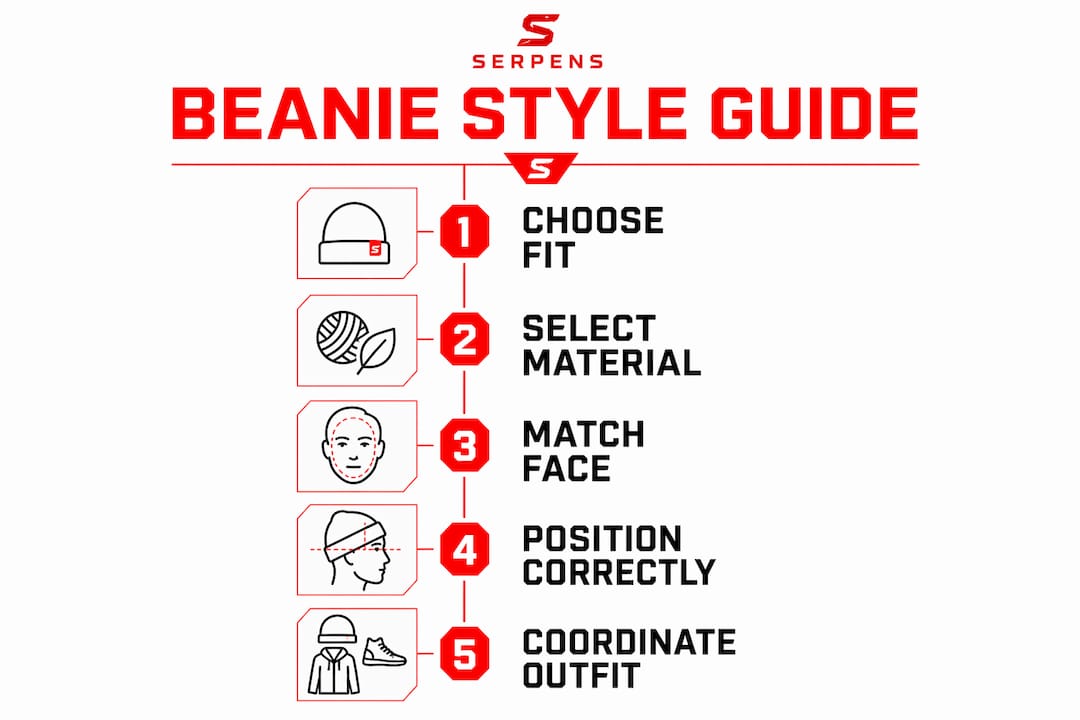
A well-fitted beanie in the right material, positioned correctly for your face shape, is one of the most versatile accessories in any wardrobe.
| Point | Details |
|---|---|
| Fit beats style variety | A snug, well-positioned beanie always looks better than an interesting style worn incorrectly. |
| Match knit weight to outfit | Chunky knits pair with casual heavy layers; fine-gauge knits work with tailored or dressier outerwear. |
| Placement shapes your face | Wearing a beanie above the ears risks an unbalanced silhouette; the sweet spot is just touching or slightly above the ear’s top. |
| Avoid the common mistakes | Pulling too low, keeping it on indoors, and mismatching formality are the three most visible errors. |
| Serpens for the full look | Serpens carries branded hats and apparel built for casual and streetwear styling, so you can build the complete outfit around your beanie. |
The beanie deserves more credit than it gets
Here’s the thing most style guides won’t say: the beanie is one of the hardest accessories to wear well precisely because it looks so simple. A scarf or a belt has obvious structure. A beanie is just a knit tube, and that simplicity is deceptive. When it’s wrong, it’s visibly wrong in a way that a bad belt never is.
What I find genuinely underrated is the beanie’s ability to define the register of an entire outfit. Put a fisherman beanie on a trench coat look and it reads downtown cool. Put a chunky cable-knit on the same outfit and it reads weekend errand run. The hat is doing more tonal work than most people realize.
The 2026 shift toward natural fibers and structured fits is the right direction. Cashmere and merino beanies feel better, photograph better, and hold their shape across a season of wear. The investment is worth it if you’re going to wear one regularly. And the fisherman style, worn high and tight, is the single most underused option in most people’s rotation. It works with more outfits than you’d expect and avoids the “I grabbed whatever was on the hook” energy that plagues standard beanies worn carelessly.
The real advice is this: treat the beanie like any other considered accessory. Buy fewer, buy better, and position it on purpose.
Serpens has the pieces to build around your beanie
If you’re putting together a beanie outfit from scratch, the hat is only one piece. Serpens carries the casualwear and streetwear staples that actually work with a beanie — hoodies, raglan shirts, sweatpants, and branded hats designed for the same aesthetic register. No hunting across multiple stores for pieces that coordinate.

The Serpens catalog is built for the casual-to-streetwear range where beanies live. Whether you’re building a monochrome look, a layered winter fit, or a relaxed everyday outfit, the pieces are already there. For pairing ideas that go beyond the beanie itself, a style guide for tees and jeans can help you think through the full outfit. Browse the full collection at Serpens and start with the pieces you’ll actually reach for.