

Oversized is intentionally voluminous and proportionally redesigned from the ground up. Relaxed is true-to-size with engineered ease built into the pattern. Those are not the same thing, and mixing them up is how you end up with a shirt that looks like a tent instead of a statement.
Quick sizing rules before you read further:
- Relaxed fit: buy your labeled size. The extra room is already drafted in.
- Oversized fit: also buy your labeled size. Sizing up usually breaks the proportions the designer built in.
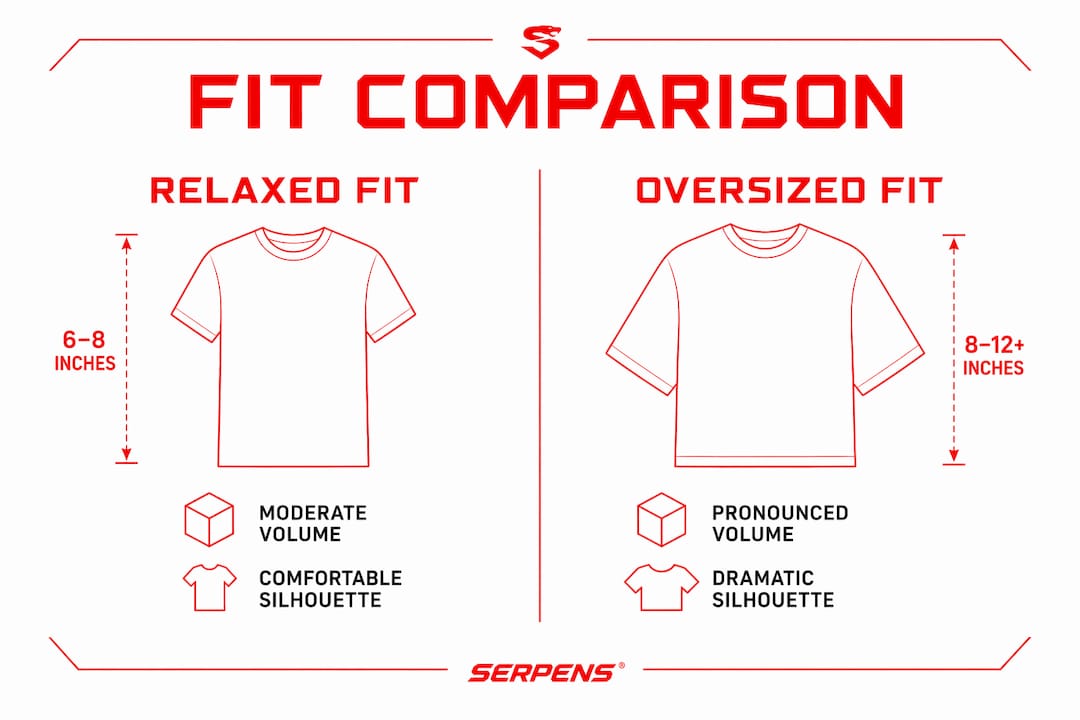
- Chest ease benchmark: relaxed adds roughly 6–8 inches of ease beyond your body measurement; oversized typically adds 8–12+ inches.
- Shoulder drop: relaxed sits near your natural shoulder; oversized drops the seam noticeably down the arm.
The rest of this guide unpacks those differences with measurements, styling examples, and a retailer-backed checklist you can use before you buy.
Table of Contents
- What does “oversized” actually mean as a fit?
- What does “relaxed fit” mean, and where does it sit between regular and oversized?
- How do oversized, relaxed, and regular fits compare side by side?
- Should you size up for oversized or relaxed fit?
- How to style oversized vs relaxed pieces
- Which fit works for your body type and lifestyle?
- How fabric and construction change how a fit reads
- Serpens measurement chart and shopping checklist
- Key Takeaways
- Why fit clarity matters more than the label
- Serpens carries both fits, and the size guide does the work for you
- Useful sources
What does “oversized” actually mean as a fit?
Oversized is not a large shirt you grabbed off the rack. It is a garment intentionally drafted with exaggerated proportions — wide chest ease, a pronounced shoulder drop, extended hem, and sleeve width that matches the scale of the rest of the piece. Every dimension is recalibrated so the volume reads as designed, not accidental.
Visual cues of a true oversized garment
- Shoulder seam: drops 1–3 inches below your natural shoulder point
- Chest ease: 8–12+ inches beyond your body measurement
- Sleeve length: extended, often reaching past the wrist
- Sleeve width: proportionally wider to match the chest volume
- Hem length: longer than a standard cut, often hitting mid-thigh or lower
- Silhouette: boxy, with minimal or no waist shaping
Intentional design vs. just sizing up
Here is the part most shoppers miss. When a brand drafts a true oversized block, the neck opening, armhole depth, and sleeve head are all scaled to the larger body. When you simply size up a regular shirt, the neck widens awkwardly, the sleeve length stays wrong, and the shoulder seam slides in a way that reads sloppy rather than styled. True oversized garments maintain structural integrity precisely because the pattern was built for that silhouette from the start.
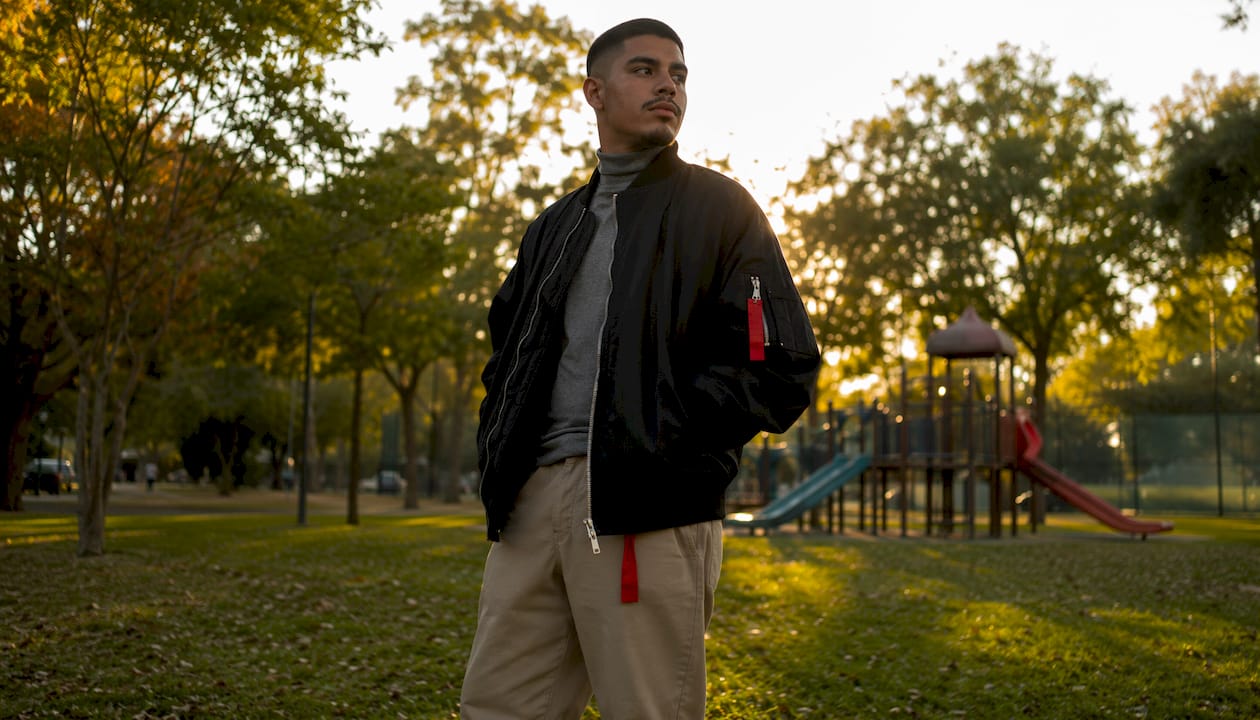
Pro Tip: On the hanger, check whether the sleeve width is proportionally wide relative to the chest. A shirt that is merely a large size will have a standard-width sleeve on a wide chest — that mismatch is the tell. A true oversized piece looks balanced even on the hanger.
What does “relaxed fit” mean, and where does it sit between regular and oversized?
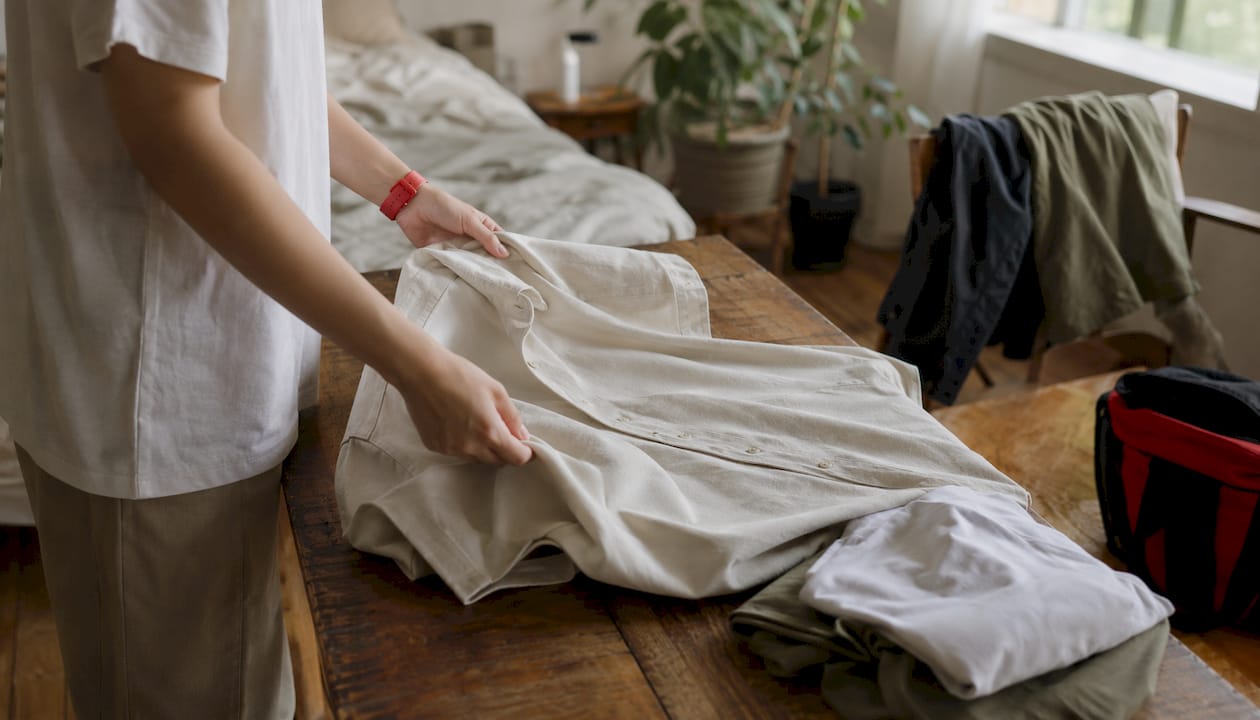
Relaxed fit is the middle ground between a standard regular cut and the exaggerated volume of oversized. It follows your body’s shape with added ease for comfort, and it is designed to be worn in your labeled size, not treated as a starting point for sizing up.
According to fit-range guidance from pattern authorities, the ease spectrum looks like this:
| Fit | Chest ease | Silhouette |
|---|---|---|
| Slim | 2–3 inches | Tailored, body-following |
| Regular | 4–6 inches | Straight, classic |
| Relaxed | 6–8+ inches | Loose, casual |
| Oversized | 8–12+ inches | Boxy, drapey |
How relaxed differs from regular
A regular fit keeps a certain tidiness. The fabric follows your body without clinging, and the shoulder seam lands right on your shoulder point. Relaxed pushes the fabric further away from the skin. There is no waist taper, the armhole is slightly looser, and the overall drape is more casual. The shoulder seam still sits near your natural shoulder, which is the key visual difference from oversized.
- Torso: noticeably looser than regular, but not boxy
- Shoulder: sits at or just past the natural shoulder point
- Hem: similar length to regular, not extended
- Silhouette: shaped enough to read as intentional, not shapeless
For a 40-inch chest, a relaxed medium shirt typically finishes at 46–48 inches at the chest, reflecting 6–8 inches of ease as defined by pattern authorities.
Sizing note: Relaxed pieces work best in your labeled size because the ease is placed strategically — in the chest, seat, and thigh — not added as a uniform scale-up. Buying a size up shifts those proportions and can make the garment read as ill-fitting rather than relaxed.
How do oversized, relaxed, and regular fits compare side by side?
| Feature | Regular | Relaxed | Oversized |
|---|---|---|---|
| Chest ease | 4–6 inches | 6–8+ inches | 8–12+ inches |
| Shoulder drop | None (natural shoulder) | Minimal (at or just past shoulder) | Pronounced (1–3 inches below) |
| Sleeve length | Standard | Standard to slightly extended | Extended, often past wrist |
| Sleeve width | Standard | Slightly wider | Proportionally wide |
| Hem length | Standard | Standard | Longer, often mid-thigh or below |
| Silhouette | Straight, tidy | Loose, casual | Boxy, drapey |
| Best uses | Office, smart-casual | Everyday, layering | Streetwear, fashion-forward looks |
| Sizing advice | True size | True size | True size (do not size up) |
What those measurements mean in practice
The 2–4 inch difference between relaxed and oversized chest ease sounds small on paper. On the body, it is the difference between a shirt that looks intentionally loose and one that makes a visual statement. The shoulder drop is the most visible signal: a relaxed shirt still frames your shoulders; an oversized shirt deliberately ignores them.
At-home measurement checklist
Before buying online, pull out a tape measure and check these four points on a garment you already own and love:
- Finished chest: measure across the front, armpit to armpit, and double it
- Shoulder seam to seam: measure straight across the back from one shoulder seam to the other
- Sleeve length: from the shoulder seam to the end of the cuff
- Front and back length: from the highest point of the shoulder to the hem
Compare those numbers to the brand’s size chart finished measurements. If the brand only lists body measurements, email customer service and ask for finished garment measurements — any reputable retailer will have them.
Should you size up for oversized or relaxed fit?
The short answer: no, for either. Stick to your labeled size for both relaxed and oversized — modern blocks are engineered with proportion in mind, and sizing up usually produces accidental volume rather than intentional style.
Online shopping checklist
- Find the brand’s finished chest measurement for your size (not the body measurement).
- Compare it to your own finished chest measurement from a well-fitting garment.
- Check model stats and the sample size listed in the product photos.
- Read the fabric and stretch notes — a rigid woven fabric reads differently than a stretchy jersey at the same ease.
- Look for any brand-specific notes about fit (e.g., “fits true to size” or “we recommend sizing down”).
In-store try-on checklist
- Shoulder seam: for relaxed, it should sit at or just past your natural shoulder. For oversized, it should drop noticeably but not slide down your arm.
- Sleeve length: for oversized, extended sleeves are intentional; for relaxed, they should hit your wrist or just past.
- Hem coverage: check that the hem hits where the brand intends, not where gravity takes it.
- Movement: raise your arms, sit down, and reach forward. The garment should move with you without the hem riding up excessively.
Pro Tip: When trying on an oversized piece, layer a fitted base underneath and check how the sleeve behaves. If the sleeve bunches at the wrist and the shoulder seam sits mid-arm, the piece is working as designed. If the neck gapes and the sleeve length is wrong, you are wearing a size too large, not a true oversized cut.
When to alter
Small tailoring fixes can save a garment without destroying its intent. Shortening the hem on a relaxed shirt by an inch or two is safe. Narrowing the sleeve opening on an oversized piece is fine. What you should not do is take in the side seams of a true oversized garment to make it fit more closely — that removes the ease the pattern was built around and collapses the silhouette entirely.
How to style oversized vs relaxed pieces
The core rule for both fits is proportion: balance volume somewhere in the outfit. The difference is how much contrast you need.
Proportion rules
- Oversized top: pair with slim or straight-leg bottoms to anchor the look. Wide-leg pants can work, but only if the top is cropped or tucked.
- Relaxed top: pair with tailored or straight-leg bottoms. The lower contrast means you can wear slightly roomier bottoms without losing shape.
- Layering: oversized pieces layer well over fitted base layers; relaxed pieces layer well under structured outerwear.
Outfit examples
Casual (oversized):
- Oversized graphic tee + slim straight jeans + chunky sneakers
- Oversized hoodie + joggers + low-profile sneakers (keep both pieces in the same tonal family)
Casual (relaxed):
- Relaxed linen shirt + straight-leg chinos + white sneakers or loafers
- Relaxed sweatshirt + slim jeans + ankle boots
Smart-casual:
- Relaxed Oxford shirt tucked into tailored trousers + leather loafers
- Oversized blazer (worn as a statement piece) + fitted turtleneck + slim trousers
Streetwear:
- Oversized tee + wide-leg cargo pants + chunky sneakers + minimal accessories
- Layered oversized hoodie under a cropped jacket + straight-leg jeans + high-top sneakers
Footwear and outerwear
Fashion content consistently recommends pairing oversized tops with fitted bottoms, and the same logic applies to shoes. Chunky sneakers or boots add visual weight at the base that balances an oversized silhouette. Slim loafers or minimalist sneakers work better with relaxed fits, where you want the shoe to complement rather than compete. For outerwear, a cropped jacket over an oversized top creates contrast; a long coat over a relaxed outfit keeps the proportions clean.
Which fit works for your body type and lifestyle?
Neither fit is universally flattering or universally unflattering. What matters is where the volume sits and how you balance it.
By body type
- Petite frames: relaxed fit in lightweight fabrics keeps the look proportional. For oversized, crop the top or tuck it to avoid losing your waist entirely. Avoid oversized pieces with very long hems.
- Tall frames: both fits work well. Oversized pieces with extended hems read as intentional rather than too-short. Relaxed fits benefit from the extra length that comes with height.
- Athletic builds: relaxed fit gives room through the chest and shoulders without looking shapeless. Oversized works if the shoulder drop is not so extreme it reads as a size error.
- Curvy frames: relaxed fit through the torso with a slight tuck at the front creates shape without restriction. Oversized can work beautifully when balanced with a fitted bottom.
- Broad-shouldered frames: oversized pieces with a pronounced shoulder drop can actually soften the shoulder line. Relaxed fits with a standard shoulder seam placement keep the natural width.
By use case
- Layering: looser silhouettes reduce fit anxiety and improve layering versatility across seasons. Oversized pieces layer over hoodies and base layers easily; relaxed pieces layer under structured jackets without adding bulk.
- Commuting and travel: relaxed fit moves with you and does not require the same level of styling attention as oversized.
- Lounging: either works, but relaxed fit in a soft knit is the practical choice.
- Streetwear and fashion-forward looks: oversized is the natural home here.
Pro Tip: A single tailoring tweak can adapt either fit for a different body type. Shortening the hem on an oversized piece by 2–3 inches makes it work for petite frames without touching the silhouette. Adding a half-tuck on a relaxed shirt creates waist definition without altering the garment.
How fabric and construction change how a fit reads
The same nominal fit can look completely different depending on what it is made from. A relaxed cotton canvas shirt holds its shape and reads as structured. The same relaxed cut in lightweight viscose drapes close to the body and reads almost like a regular fit.
Fabric effects
- Heavy knits and canvas: add structure, emphasize boxiness, and hold oversized volume well
- Lightweight wovens (linen, viscose, silk): drape and reduce perceived volume; an oversized piece in silk reads softer and less boxy
- French terry and fleece: hold shape while staying soft; good for relaxed fits that need to maintain proportion through the day
- Technical fabrics (nylon, polyester blends): tend to be stiffer and can make oversized pieces read as bulkier than intended
Construction cues to check
A garment’s construction signals whether added ease reads as curated volume or a sloppy fit. Look for:
- Shoulder reinforcing: a reinforced shoulder seam holds the drop in place and prevents the sleeve from twisting
- Sleeve head shaping: a shaped sleeve head maintains the intended drape; a flat sleeve head can cause the sleeve to rotate forward
- Hem finishes: a weighted or double-stitched hem keeps an oversized piece from riding up or losing its intended length
- Side seam placement: straight side seams on an oversized piece are intentional; curved side seams signal a more fitted intent
Quick shopping checklist for product pages
- Check fabric content and weight (grams per square meter, if listed)
- Look for construction notes (reinforced seams, sleeve head shaping)
- Read the care instructions — heavy shrinkage in wash can collapse an oversized silhouette
- Note whether the model is wearing the sample size and what their measurements are
Serpens measurement chart and shopping checklist
The table below shows sample finished measurements for relaxed and oversized blocks across three sizes. These are illustrative examples to show how fit type changes finished dimensions without changing the size label.
| Size | Relaxed finished chest | Oversized finished chest | Relaxed shoulder (seam to seam) | Oversized shoulder (seam to seam) |
|---|---|---|---|---|
| Small | — | 46–48 inches | — | — |
| Medium | 46–48 inches | 48–52 inches | — | — |
| Large | 50 inches | 52 inches | — | — |
These finished chest measurements reflect pattern authority guidance: relaxed fit adds 6–8 inches, oversized fit adds 8–12+ inches beyond body measurement.
Sample values only. Always verify against the brand’s published size chart for the specific garment.
The finished chest for a relaxed medium typically runs 46–48 inches, and an oversized medium typically runs 48–52 inches, both on a body that measures around 40 inches at the chest. These ranges match industry guidance for chest ease: relaxed fit adds 6–8 inches, oversized fit adds 8–12+ inches.
Checklist for product pages and customer service requests
- Finished chest measurement (not body measurement)
- Shoulder seam to seam (back measurement)
- Sleeve length from shoulder seam to cuff
- Front length and back length from shoulder to hem
- Fabric weight and content
- Model height, weight, and sample size worn in photos
Shopping tips for Serpens customers
Serpens lists product dimensions on each item page. For hoodies, sweatpants, and tees, check the size guide tab before adding to cart. If the finished measurements are not listed for a specific item, reach out via the contact page and ask for the garment’s finished chest and shoulder measurements. The team can confirm whether a piece is drafted as a relaxed or oversized block and recommend the right size for your measurements.
Key Takeaways
Oversized fit is intentionally drafted with 8–12+ inches of chest ease and a pronounced shoulder drop; relaxed fit adds 6–8 inches of ease while keeping the shoulder seam near your natural shoulder point — buy your labeled size for both.
| Point | Details |
|---|---|
| Chest ease defines the difference | Relaxed fit adds 6–8 inches, oversized fit adds 8–12+ inches beyond your body measurement, matching pattern authority benchmarks. |
| Shoulder drop is the visual tell | Relaxed sits at or just past your natural shoulder; oversized drops 1–3 inches below it. |
| Always buy your labeled size | Sizing up breaks the engineered proportions of both relaxed and oversized garments. |
| Balance volume with fitted elements | Pair oversized tops with slim bottoms; pair relaxed tops with straight or tailored bottoms. |
| Serpens for relaxed and oversized styles | Serpens carries hoodies, tees, and sweatpants in both blocks — check finished measurements before ordering. |
Why fit clarity matters more than the label
The fashion industry has a labeling problem. “Relaxed” means something precise in pattern-making terms: a specific ease range, a specific shoulder placement, a specific drape. But on a product page, it often gets used loosely, which is exactly why shoppers end up with garments that do not match their expectations.
What actually separates a well-chosen oversized piece from a shirt that just looks too big is not the label. It is whether the designer drafted the garment with that volume in mind from the start. Serpens approaches fit labeling with that distinction in mind, specifying whether a piece is a relaxed or oversized block so customers can make the call based on actual measurements rather than guesswork.
If you are unsure which fit is right for a specific piece, use the measurement checklist above and contact Serpens support for finished garment dimensions before you order.
Serpens carries both fits, and the size guide does the work for you
Knowing the difference between oversized and relaxed fit is one thing. Finding pieces that are actually drafted correctly in each block is another. Serpens stocks hoodies, T-shirts, raglan shirts, and sweatpants across both fit types, with size guides that list finished chest and shoulder measurements so you are not guessing from a body-measurement chart alone.
Browse the full Serpens collection to find relaxed and oversized styles in casual, streetwear, and lifestyle cuts. If you want a fit recommendation before you order, the support team can confirm which block a specific piece uses and suggest the right size based on your measurements. No returns from sizing guesses.
Useful sources
- Slim Fit vs Regular Fit vs Relaxed Fit — Tailor Size Guide’s detailed breakdown of chest-ease ranges across fit types, with measurement tables. A pattern authority reference.
- Oversized Fit vs Relaxed Fit: Key Differences — Covers intentional design versus sizing up, construction signals, and sizing advice. Brand editorial resource.
- Baggy Outfits: The Real Rules — Clarifies the distinction between baggy (a pattern attribute) and oversized (a size/volume decision), plus trend context. Trend editorial.
- Definition of Relaxed Fit — Glossary entry with sample finished measurements for relaxed fit across standard sizes. Industry reference.
- Understanding Fit Terms: Slim vs Relaxed vs Oversized — Styling and pairing recommendations for each fit type, with proportion rules. Fashion content resource.