

Pick the size that matches the chest width of a tee you already own, measured pit-to-pit while it lies flat. That single number, compared against a product’s garment chart, is more reliable than any size label. If you’re between sizes, size up for casual and fashion tees. Women ordering unisex styles should size down one to two sizes, since unisex cuts use a wider, masculine block. A men’s medium typically fits a 38–40 inch chest; a women’s medium fits closer to 35–37 inches, with chest width accounting for about 80% of perceived fit.
Table of Contents
- What does a t-shirt size guide actually show you?
- How to measure a t-shirt and your body
- How fit styles change the size you should pick
- Rules of thumb when you’re between sizes or buying for a specific purpose
- Quick conversions and common size mappings
- How fabric, construction, and model lineups affect how a shirt actually fits
- Key Takeaways
- The measurement that actually matters
- Sized right before you shop
What does a t-shirt size guide actually show you?
The charts below list flat garment measurements, meaning the shirt is laid on a table and measured across the chest from armpit seam to armpit seam. That number is half the full chest circumference. To compare it to your body measurement, double it. A flat chest width of 20 inches equals a 40-inch body circumference.
Men’s / unisex size chart (inches)
| Size | Chest width (pit-to-pit) | Body length | Sleeve length |
|---|---|---|---|
| XS | 16.5 | 26 | 7.5 |
| S | 18 | 27 | 8 |
| M | 20 | 29 | 8.5 |
| L | 22 | 29 | 9 |
| XL | 24 | 30 | 9.5 |
| 2XL | 26 | 31 | 10 |
| 3XL | 29 | 32 | 10.5 |
Women’s size chart (inches)
| Size | Chest width (pit-to-pit) | Body length |
|---|---|---|
| XS | 15 | 24 |
| S | 16.5 | 25 |
| M | 18 | 26 |
| L | 20 | 27 |
| XL | 22 | 29 |
| 2XL | 24 | 29 |
Youth size chart (inches)
| Size | Chest width (pit-to-pit) | Body length |
|---|---|---|
| YXS (2–4) | 11 | 16 |
| YS (6) | 13–14 | 18 |
| YM (10–12) | 15 | 20 |
| YL (14–16) | 17–18 | 22 |
| YXL (18–20) | 18.5–19.5 | 24 |
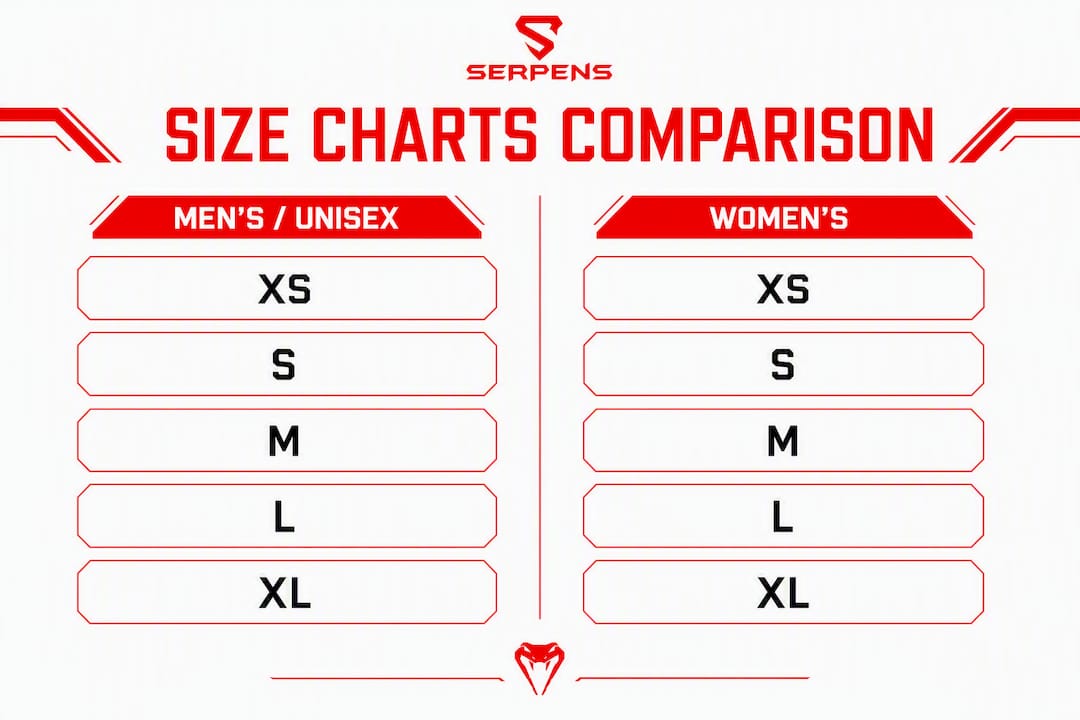
These are typical US market ranges. Brand blanks vary significantly: a Bella+Canvas 3001 medium runs roughly 1–2 inches slimmer in the chest than a Gildan 5000 at the same label. Always cross-reference the specific product page chart and check model lineups before ordering.
How to measure a t-shirt and your body
Two approaches work: measure a shirt you already own, or measure your body directly. The first is faster and more accurate.
Measuring a garment flat
- Lay the shirt on a flat, hard surface with no wrinkles or bunching.
- Chest (pit-to-pit): Place the tape measure horizontally across the chest, from the center of one armpit seam to the center of the other. Record this number.
- Body length: Measure from the highest point of the shoulder (where the collar seam meets the shoulder) straight down to the bottom hem.
- Sleeve length: Measure from the shoulder seam at the top of the sleeve to the end of the cuff.
Smooth the fabric before each measurement and repeat twice to confirm accuracy. This is the number you match directly to a product’s flat garment chart.
Measuring your body
- Wrap a soft tape measure around the fullest part of your chest, keeping it level across your back and under your arms.
- Keep the tape snug but not tight. You should be able to slide two fingers underneath it.
- Exhale normally, then read the measurement. This is your chest circumference.
- Divide that number by two to get the equivalent flat chest width for comparing to garment charts.
Pro Tip: The most reliable method is what Custom Ink calls the “golden measurement” — measure a well-fitting tee flat, armpit to armpit, and use that exact flat number to match any brand’s garment chart. It removes all the guesswork about ease and fit labels.
How fit styles change the size you should pick
The size letter on the tag is only half the story. The cut of the shirt determines how much room you actually get at any given size, and picking the wrong fit style is the most common reason a correctly sized shirt still feels wrong.

Slim fit sits close to the body with minimal ease through the chest and waist. It’s the least forgiving cut. If you’re between sizes in a slim style, size up without hesitation.
Semi-fitted adds a little more room than slim while still following the body’s shape. It works well for people who want a clean look without feeling restricted.
Standard / regular fit is the safe default. It has enough chest ease to feel comfortable across a wide range of body types, and it’s what most size charts are calibrated to. Custom Ink recommends choosing fit first, then matching the size — and standard is the right starting point when you’re unsure.
Relaxed fit adds even more ease, often 3–4 inches over a standard cut at the same size label. A person who wears a medium in standard might wear a medium in relaxed and find it noticeably roomier, or they might size down to a small for a similar silhouette.
Oversized is intentionally large. The goal is drape and volume, not a fit match. Most people size up one full size from their standard fit. For a deeper look at how oversized and relaxed cuts compare in practice, the Serpens guide on oversized vs. relaxed fit breaks down the styling differences clearly.
Unisex uses a masculine block: wider shoulders, straighter torso, more chest room. Women buying unisex tees should size down one to two sizes to approximate their normal women’s fit.
Rules of thumb when you’re between sizes or buying for a specific purpose
- Between sizes for a casual or fashion tee? Size up. A slightly larger shirt can be styled or layered; an undersized one just looks strained.
- Between sizes in a slim or fitted cut? Still size up. Slim cuts have almost no ease buffer, so the smaller size will feel restrictive across the chest and shoulders.
- Women buying unisex? Drop one to two sizes from your usual women’s size. A women’s medium typically translates to a unisex small or extra-small depending on the brand.
- Men buying women’s cuts? Size up significantly, or stick to the equivalent men’s label. Women’s cuts are narrower through the shoulders and chest.
- Buying for layering? Add one size to account for the base layer underneath. This applies to hoodies and sweatshirts too — heavier garments need more ease by design.
- Accounting for shrinkage? Pure cotton tees can shrink 3–5% on the first wash. If you’re right at the top of a size range, size up or choose a cotton-poly blend, which shrinks less and holds its shape better.
Pro Tip: If you’re ordering a custom tee and want to confirm sizing before artwork is placed, pairing your measurements with design placement guidance (like this custom shirt art guide) helps you avoid artwork that looks off-center on the wrong size.
For group orders where you can’t collect individual sizes, a common distribution rule is 1S : 2M : 3L : 3XL : 1 2XL per 10 shirts. It’s not perfect, but it covers the most common US size distribution without leaving people out.
Quick conversions and common size mappings
Inches to centimeters (chest width)
| Inches | Centimeters |
|---|---|
| 16 | 40.6 |
| 18 | 45.7 |
| 20 | 50.8 |
| 22 | 55.9 |
| 24 | 61.0 |
| 26 | 66.0 |
To convert any inch measurement to centimeters, multiply by 2.54. To go the other direction, divide by 2.54.
Flat chest width to circumference: multiply the flat number by 2.
Common chest-to-size mappings (men’s / unisex body circumference)
- S: 34–37 inches
- M: 38–41 inches
- L: 42–45 inches
- XL: 46–49 inches
- 2XL: 50–53 inches
These are body circumference ranges, not flat garment widths. Men’s M typically fits a 38–40 inch chest; women’s M fits closer to 35–37 inches. Ranges shift by brand and cut.
Common quick questions:
- How do I find my t-shirt size? Measure a well-fitting tee flat across the chest and match that number to the product’s garment chart.
- What are standard t-shirt sizes? US sizing runs XS through 5XL for men/unisex and XS through 2XL for most women’s cuts, with chest width as the primary determinant.
- Is a size 40 a medium or large? A 40-inch chest circumference (20-inch flat width) typically falls at the top of a men’s medium or the bottom of a large, depending on the brand.
- What does a 17/34/35 shirt size mean? That’s a dress shirt notation: 17-inch neck, 34–35-inch sleeve length. It doesn’t translate directly to casual tee sizing, where chest width is the key number.
How fabric, construction, and model lineups affect how a shirt actually fits
The chart gets you close. Fabric and construction get you the rest of the way.
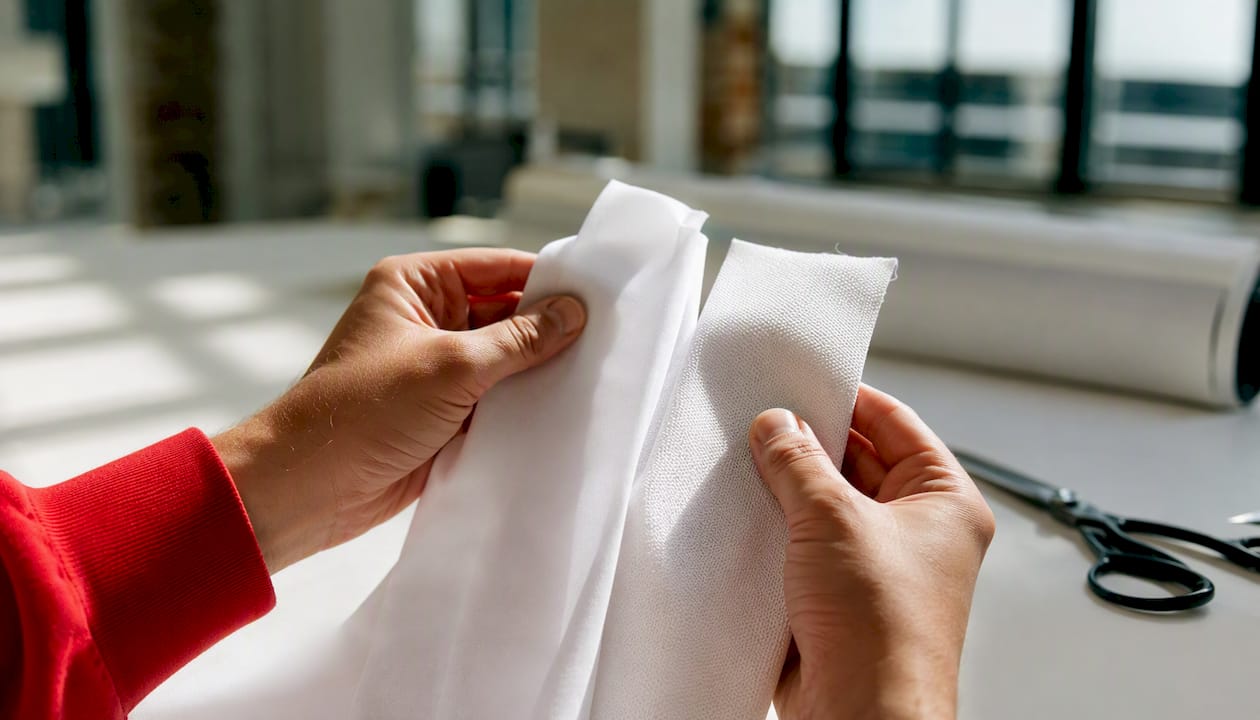
Cotton shrinks 3–5% on the first wash, which can pull a borderline fit into uncomfortable territory. Tri-blend fabrics (cotton, polyester, rayon) shrink far less and drape with a slimmer, softer feel even when the flat measurements match a heavier cotton tee. Two shirts with identical garment specs can feel completely different depending on the fiber content. Tri-blend fabrics typically shrink less and drape with a slimmer, softer feel than 100% cotton tees at the same size. For more on how fabric weight and construction affect drape and shrinkage across casual apparel, the Serpens breakdown of French terry vs. fleece covers the underlying principles well.
Model lineups are underused. A size chart tells you numbers; a model photo tells you what those numbers look like on a real body. When a product page shows a model at 5’10", 170 lbs wearing a large, you can immediately calibrate whether that drape and length matches what you want.
Model lineups with height, weight, and size worn improve fit prediction more than brand-agnostic charts because they show drape and fabric behavior on real bodies — something a flat number on a table simply cannot replicate.
Pro Tip: Before ordering, check the product page for both the garment flat measurements AND the model lineup. Use the flat measurement to confirm size, and use the model photo to confirm fit style and length. Together, they eliminate almost all sizing guesswork.
Key Takeaways
Chest width is the single most reliable measurement for picking a t-shirt size — measure a tee you already own flat across the chest, match it to the product chart, and size up when in doubt.
| Point | Details |
|---|---|
| Measure flat, not around | Lay a well-fitting tee flat and measure pit-to-pit; that number matches directly to garment charts. |
| Double flat width for circumference | Multiply the flat chest measurement by 2 to compare it to body circumference measurements. |
| Pick fit style before size | Slim, standard, relaxed, and oversized cuts each carry different ease; choose the cut first, then size. |
| Size up when between sizes | For casual and fashion tees, the larger size is always the safer choice and easier to style. |
| Serpens product pages | Each Serpens listing includes garment flat measurements and model lineups — use both before checkout. |
The measurement that actually matters
Most sizing frustration comes from treating the letter on the label as a fixed truth. It isn’t. A medium from one brand is a large from another, and the same person can wear three different size letters across three different cuts of the same shirt. The letter is a starting point, not an answer.
What actually works is anchoring to a physical measurement: the flat chest width of a shirt that already fits you well. That number travels across brands, cuts, and even garment types. Once you have it, you’re not guessing anymore.
The other thing most guides underemphasize: model lineups are more useful than charts for understanding length and drape. A chart tells you the shirt is 29 inches long. A model photo at your height tells you whether that lands at the hip or the waist. Use both.
For Serpens shoppers specifically, every product page carries garment flat measurements alongside model photos. Check the chest width first, then look at the model lineup to confirm the length and drape match what you’re after. If you want a looser look, size up from your flat measurement match. If you want it to sit closer, stay at your match or size down one, especially in standard and relaxed cuts.
Sized right before you shop
Serpens carries tees, hoodies, and sweatpants with garment flat measurements and model lineups on every product page, so you can apply everything in this guide directly at checkout. No guessing, no returns from a size that looked right on paper.
Each listing shows the chest width, body length, and a model photo with height and size worn noted. If you’re shopping for a relaxed or oversized look, size up from your flat measurement match. If you want a cleaner fit, stay at your number. Either way, the data is there on the page.
Browse the full collection at Serpens and check the garment specs on any product before you add it to your cart.